TRADING PASSION FOR PROFIT
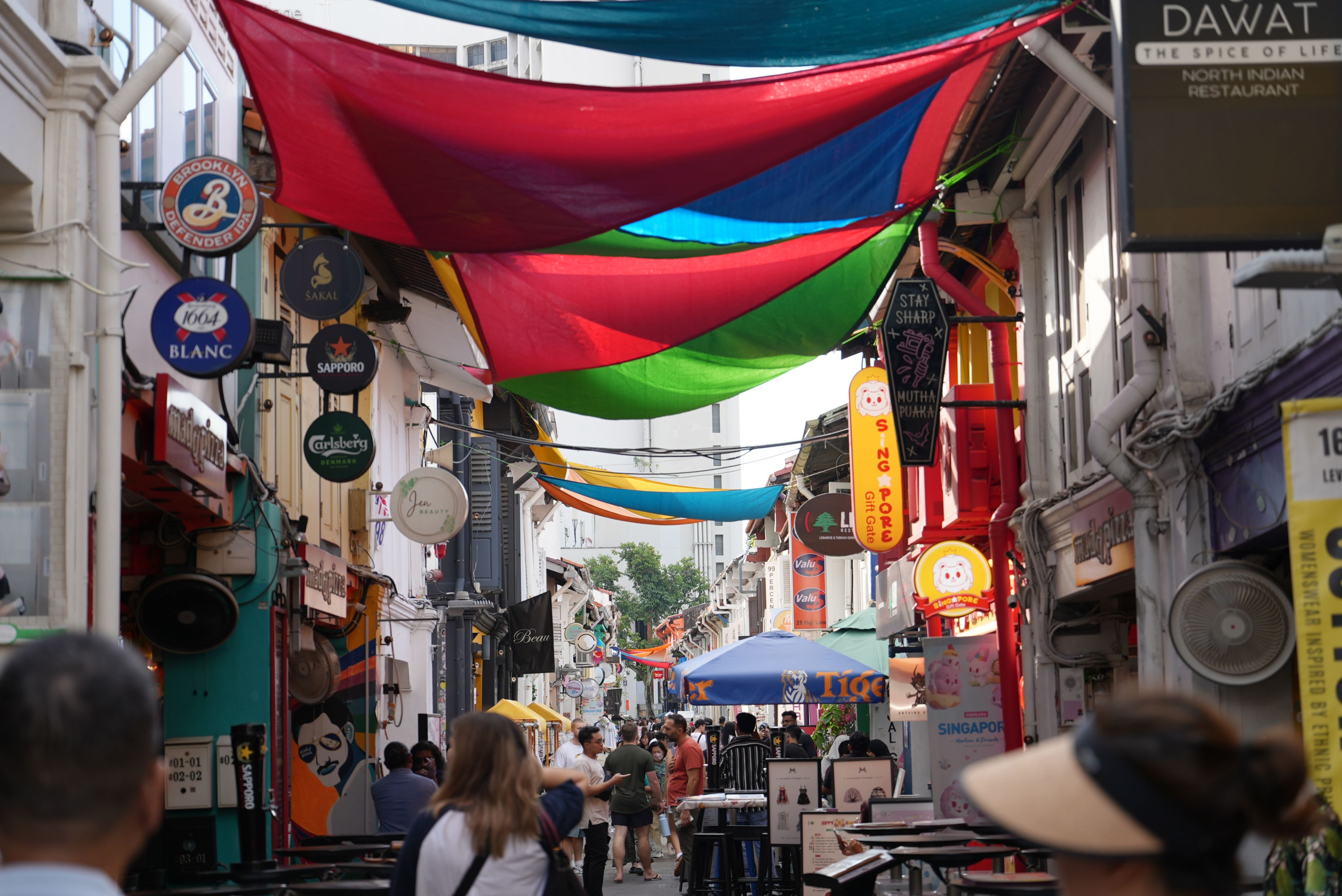

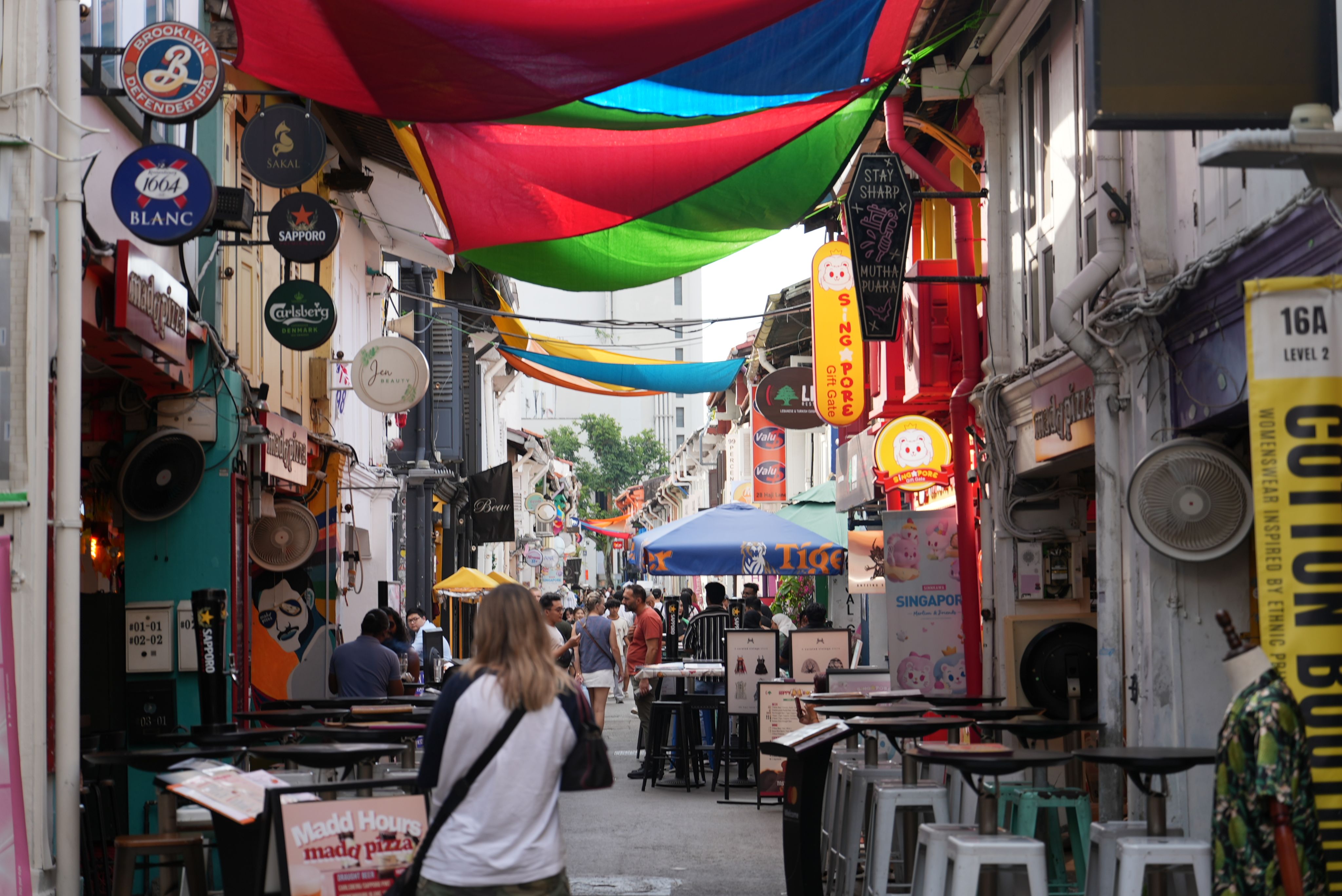
The air buzzes with the chatter of crowds bustling through the narrow alley. Rays of sun beam through the vibrant canopies hanging in the small gap between buildings, turning life technicolour. The surrounding high-rise buildings suddenly seem small, going unnoticed amongst the bright colours shining from the strip. The muggy air and hot sun are a memory as people drink cocktails, and jazz music hums in the background. As night grows the people become louder, and buildings become canvases, murals glowing in the moonlight.
Haji Lane is known globally for its effervescent strip of boutiques, cafes and restaurants. However, some locals worry the seemingly lively location is fading away.

A digital dream
Coleman Chua sits at a desk covered in stationary, paper, cords and old cameras. One leg sits atop the other, his index finger tapping lightly on his knee. Looking down at the clutter, he describes the struggles business owners like him face on Haji Lane.
“The thing about doing business in Singapore in particular is that everything is so expensive. So renting, especially here in Haji Lane is so expensive, so it's really hard for us to kind of, plan for the future, because we're not sure how much the prices will rise by that time, like when our lease ends.”
Mr Chua and his partner Phoebe Kylie are the owners of the Digicam Depository, a second-hand digital camera store.

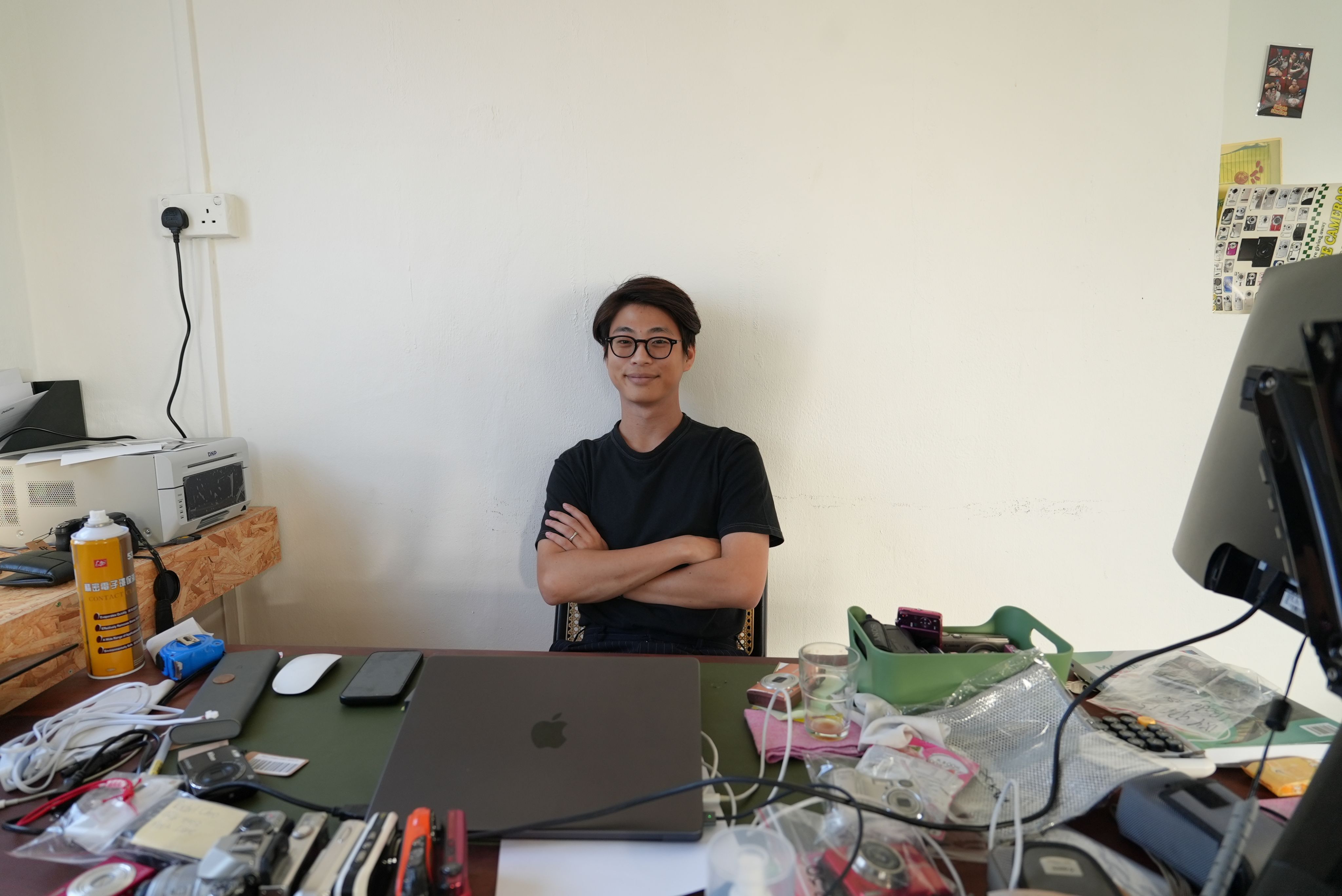
Coleman Chua has made a name for himself and his partner Phoebe Kylie after opening The Digicam Depository. Photo: Stella McGann.
Coleman Chua has made a name for himself and his partner Phoebe Kylie after opening The Digicam Depository. Photo: Stella McGann.
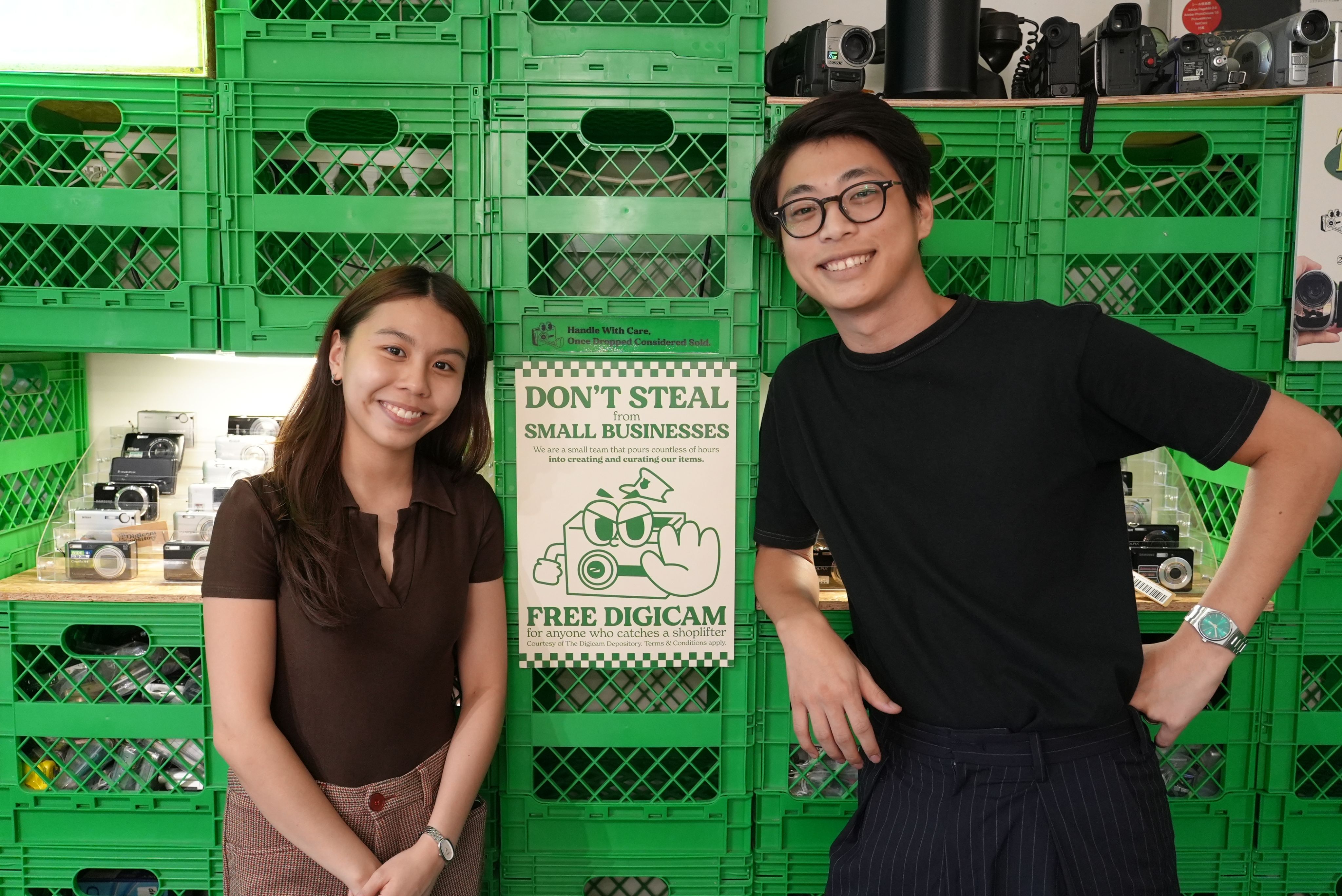
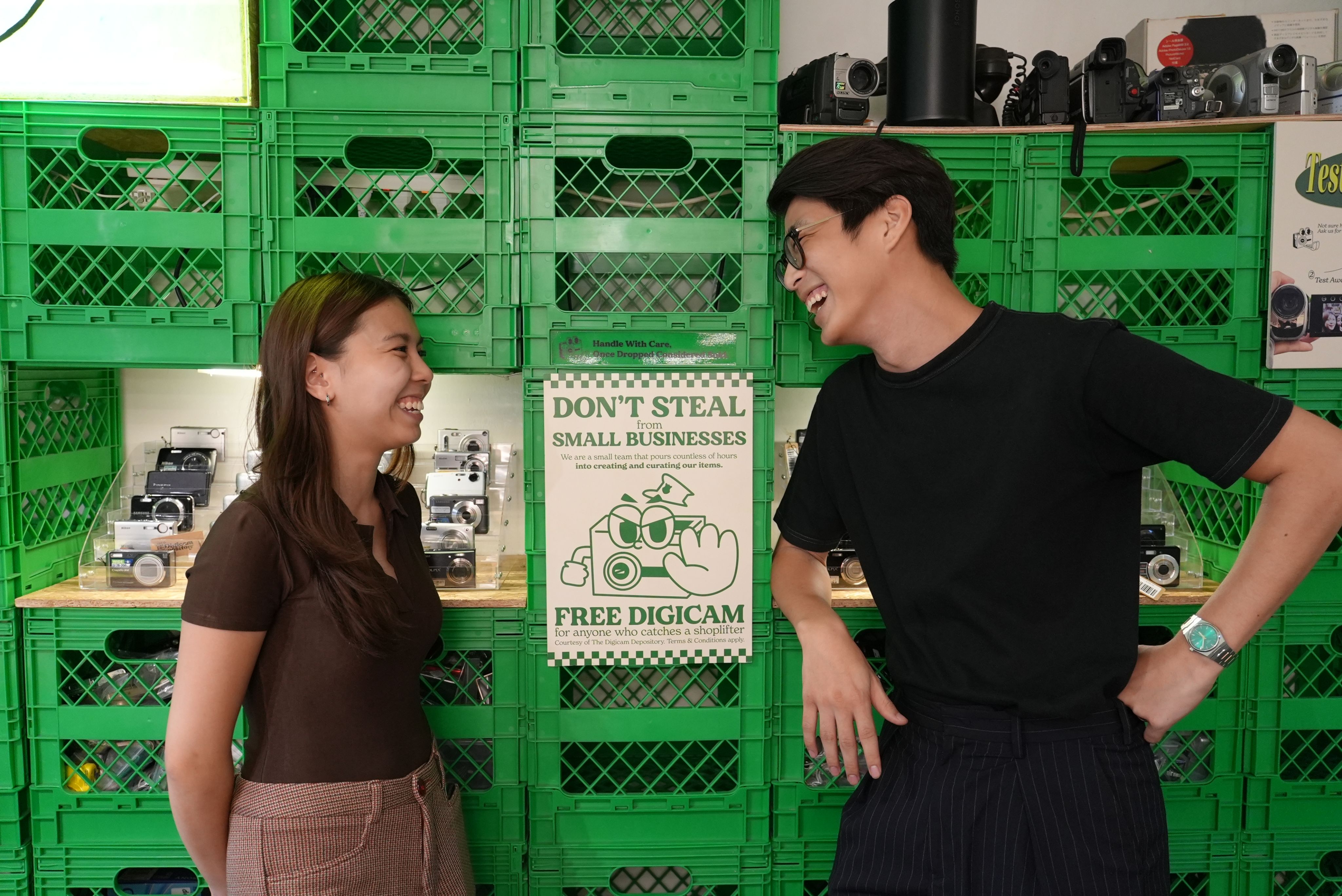
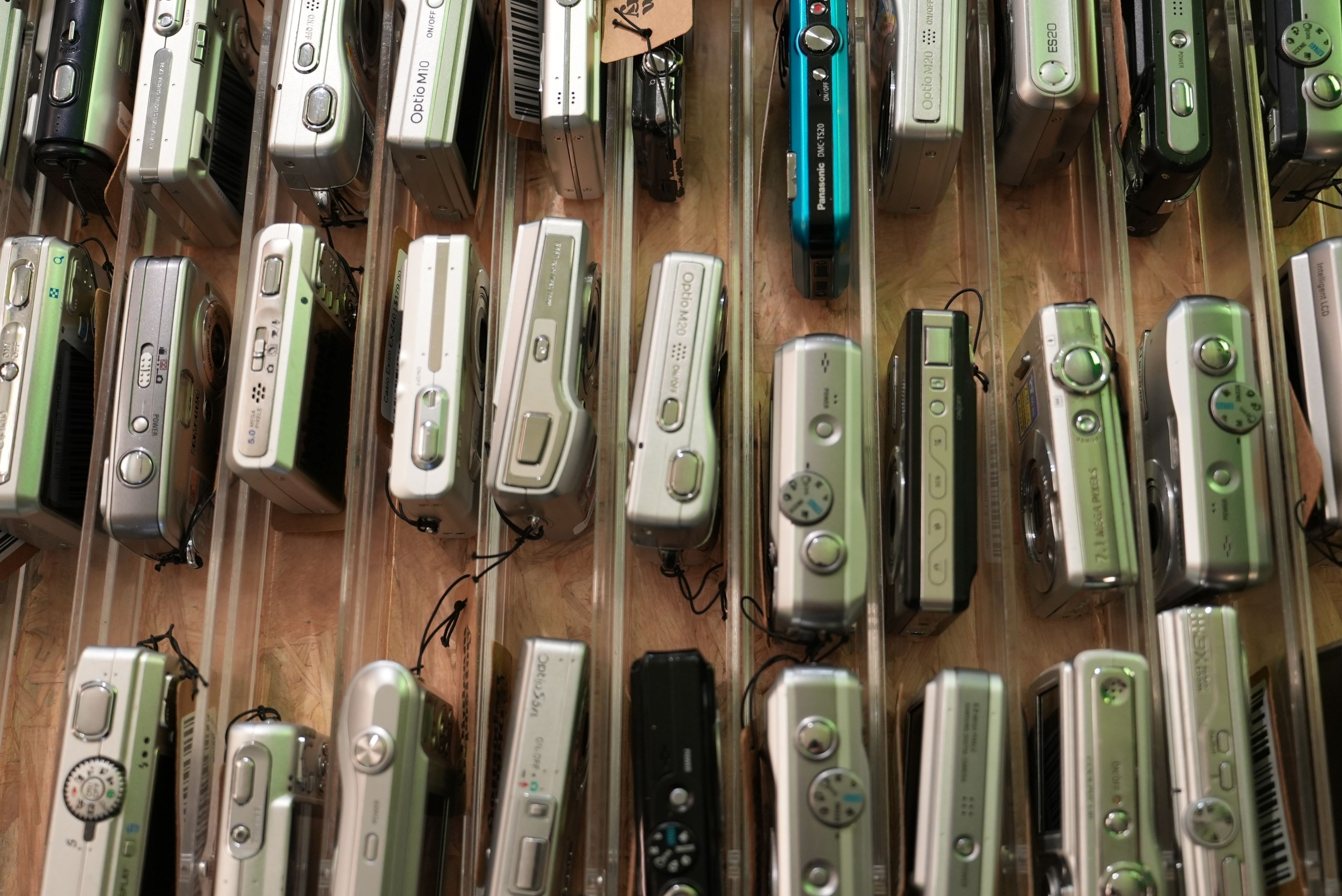
Their store at 42 Haji Lane is lined with digital cameras on shelves and a wall of bright green crates.
In a world filled with smart phones, The Digicam Depository recognises the beauty of digital cameras. Photo: Stella McGann.
In a world filled with smart phones, The Digicam Depository recognises the beauty of digital cameras. Photo: Stella McGann.
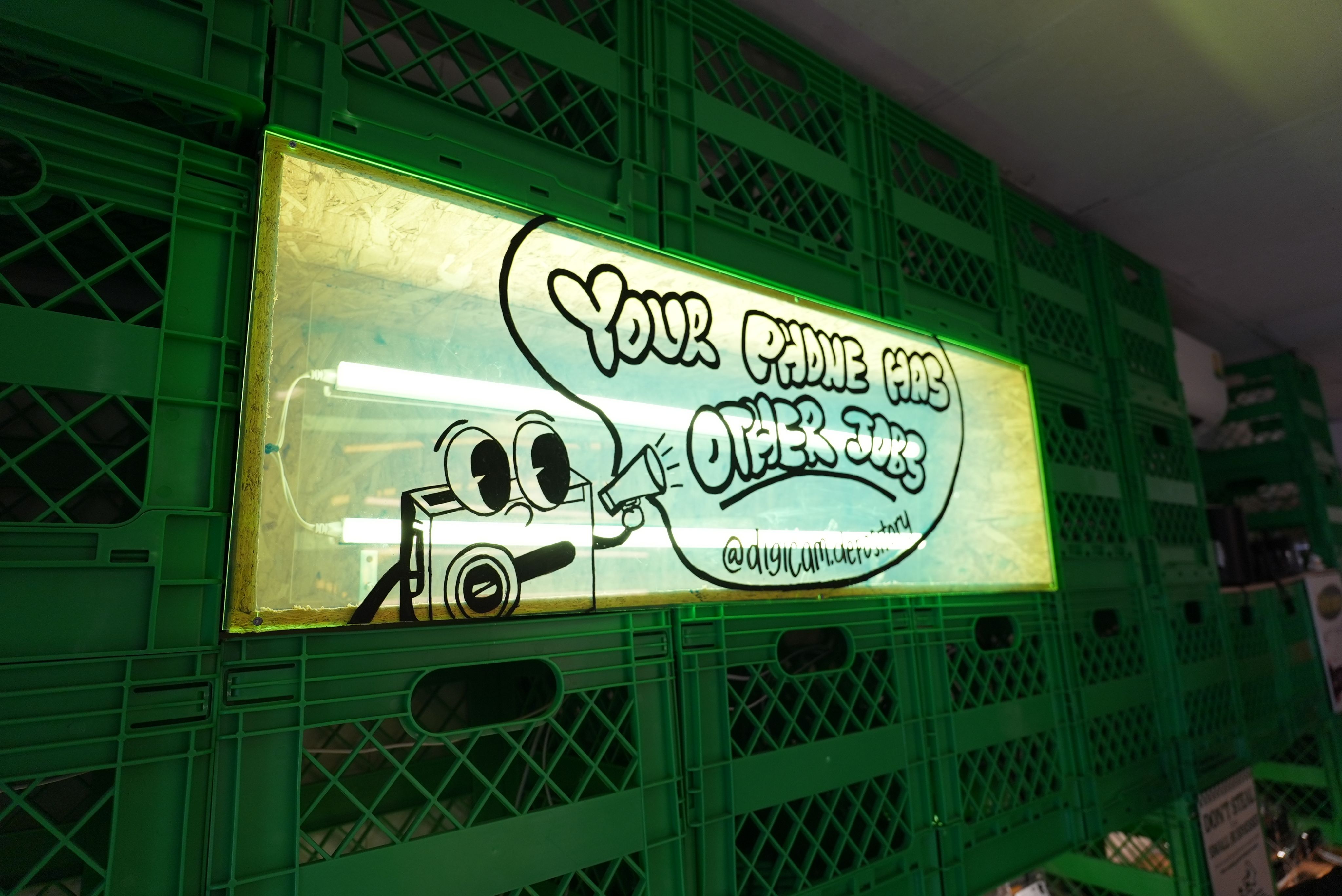
“Your phone has other jobs” is a message Mr Chu and Ms Kylie live by and is what led them to start their own business.


While packing for a trip to Korea, Ms Kylie stumbled across a childhood relic; a Samsung PL180 digital camera she had as a kid. Unaware of the impact a simple camera would leave on their lives, Mr Chu and Ms Kylie decided to bring the gadget with them.
“In that point of time, the trend wasn't so like, there wasn't a trend for it yet, so we just brought it along to Korea. We didn't think much of it and then when we got back from our trip we plugged it into the computer, and we got so enamoured by the photos we started collecting for ourselves.”
From that point on, everything changed.
Mr Chu and Ms Kylie launched their business in June of 2023, buying older, compact digital cameras from the early 2000’s and reselling them. Their business started online, primarily selling from the app Telegram, but it wasn’t long until they realised they needed to expand.
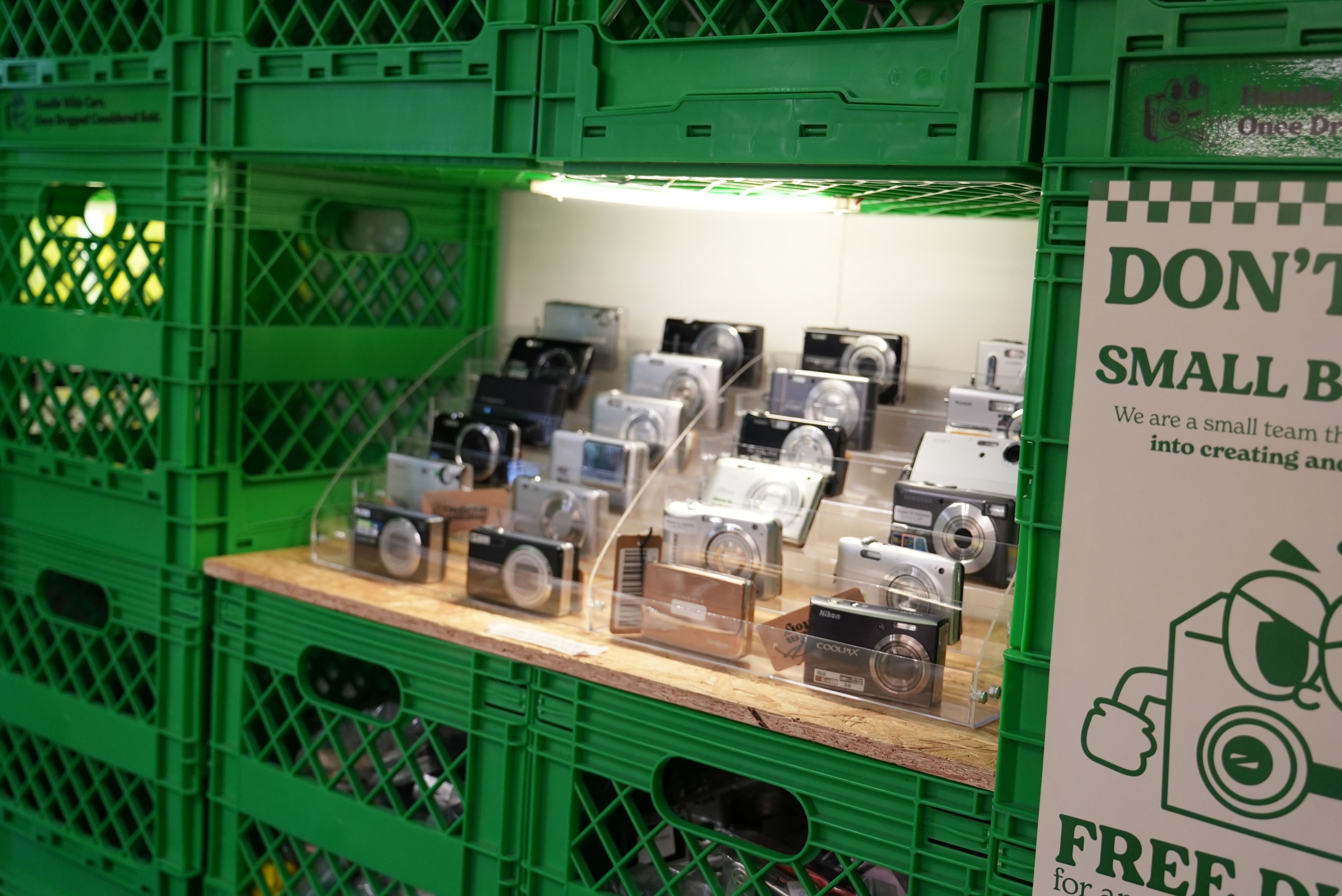
A display of digital cameras stand in the gap between crates. Photo: Stella McGann.
A display of digital cameras stand in the gap between crates. Photo: Stella McGann.
“I think we have been pretty lucky to find a lot of success in the space. We also I would say are the first digicam store in Singapore and I would like to say the largest.”
“When we first started out, no one really cared about these cameras, so it wasn't much about selling the specific models, but more of selling the idea of it, right, like selling the notion that a camera from 2005 could like outperform your phone.”
Walking up the small, steep stairs to their Haji Lane store, people rustle through the rows of cameras on the walls and table, fingers tracing the lens, looking for a camera which speaks to them the same way Ms Kylie’s camera spoke to her.
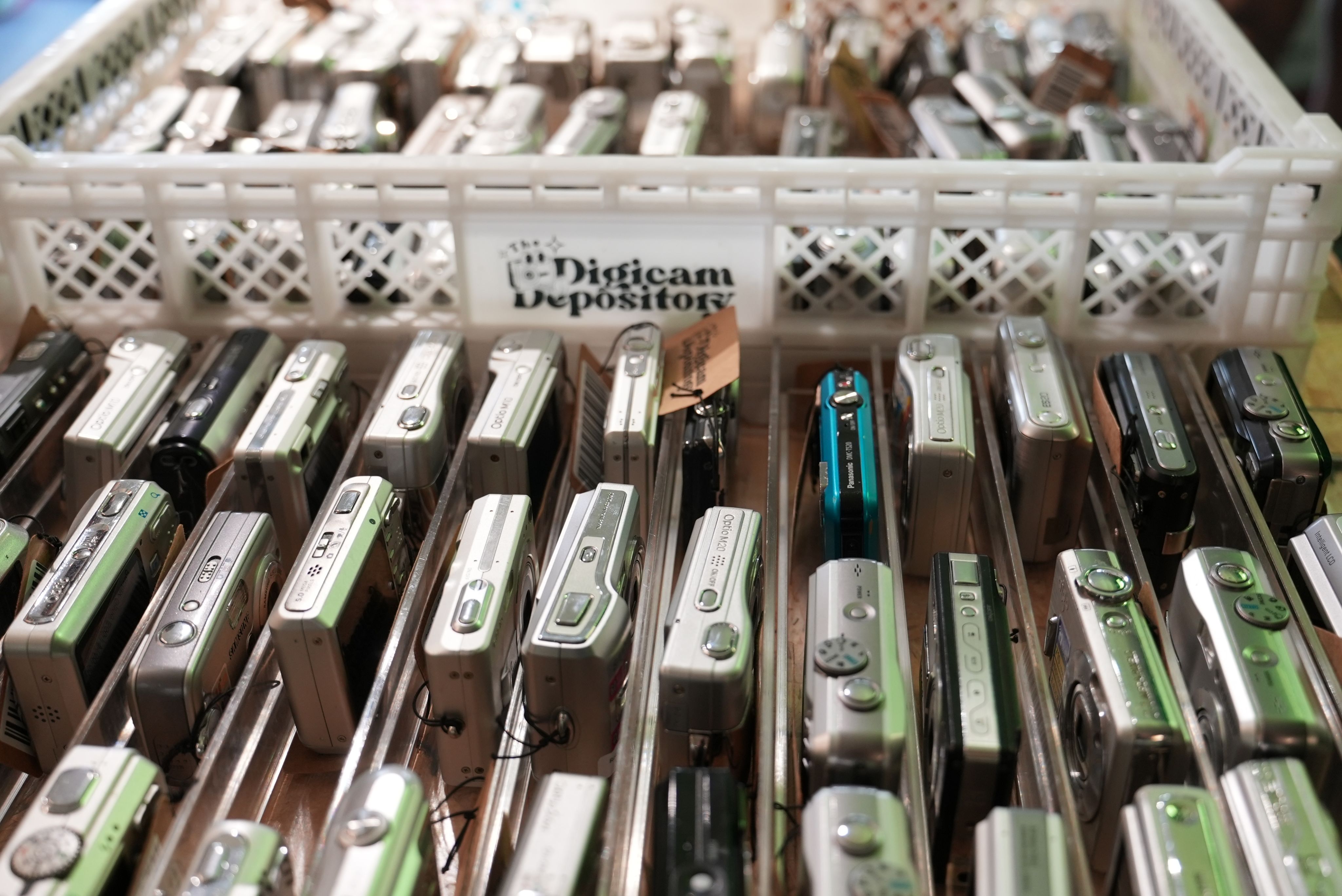
Mr Chua and Ms Kylie specialise in selling older, compact cameras from the early 2000s. Photo: Stella McGann.
Mr Chua and Ms Kylie specialise in selling older, compact cameras from the early 2000s. Photo: Stella McGann.
While The Digicam Depository found its success, Mr Chu and Ms Kylie are still struggling to keep up with the cost of renting on Haji Lane.
When asked if they plan to stay on the strip, Mr Chu says there are no concrete plans right now.
“We love the area and we hope that we can stay here, but it’s hard with the prices of rent.”
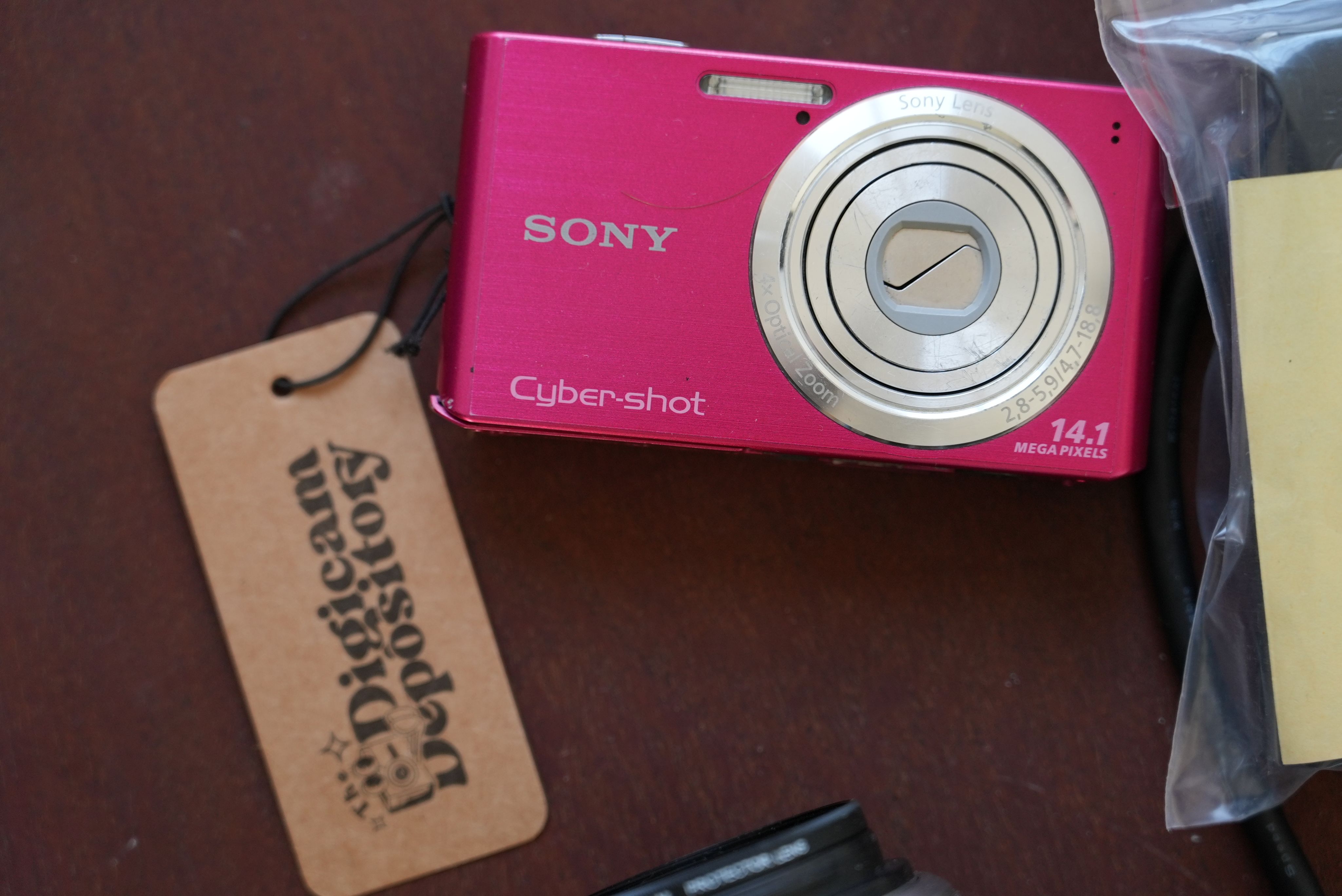
This Sony Cyber-Shot camera is one of many cameras clattered on Mr Chua's desk. Photo: Stella McGann.
This Sony Cyber-Shot camera is one of many cameras clattered on Mr Chua's desk. Photo: Stella McGann.
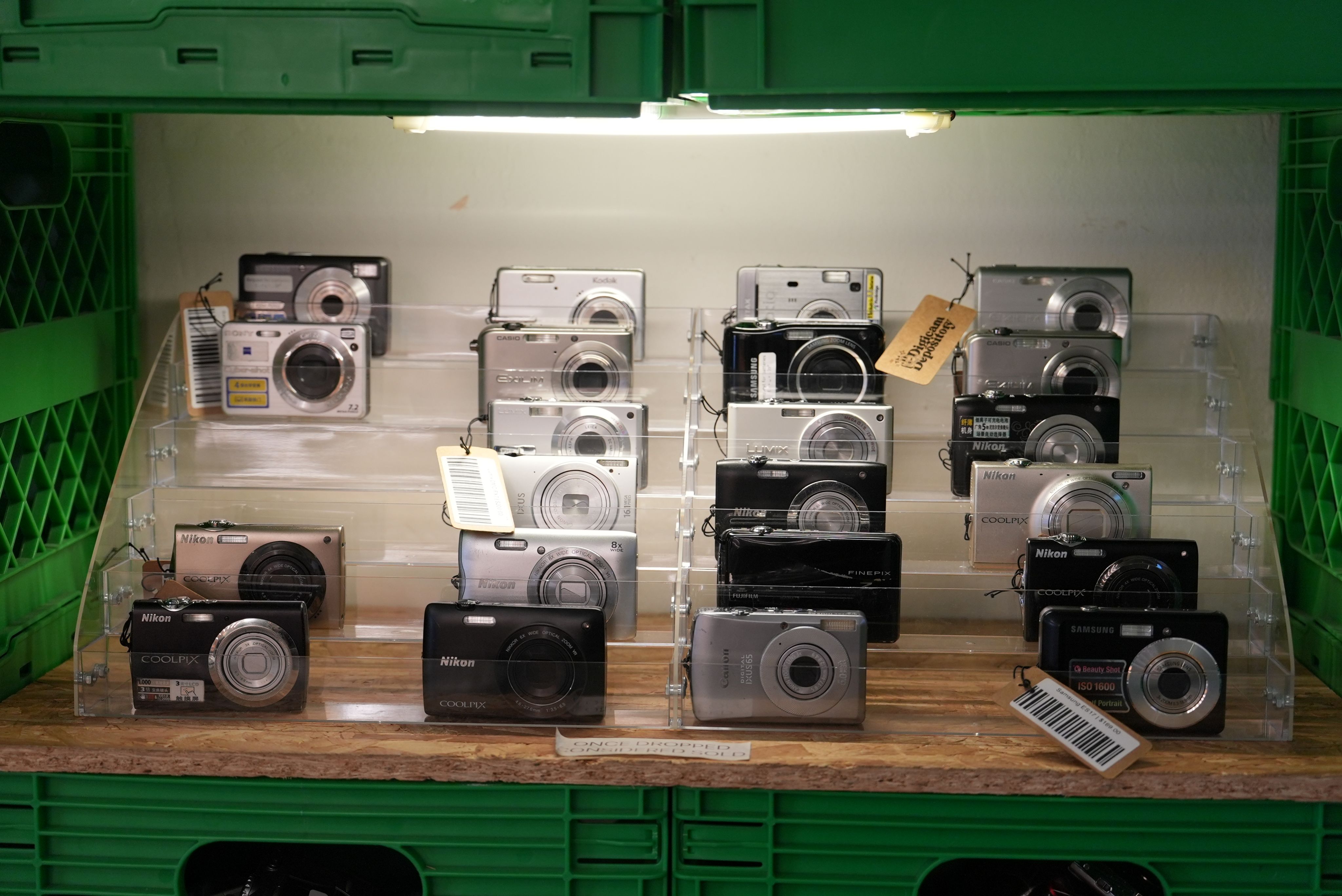
The latest digital cameras on display at The Digicam Depository. Photo: Stella McGann.
The latest digital cameras on display at The Digicam Depository. Photo: Stella McGann.
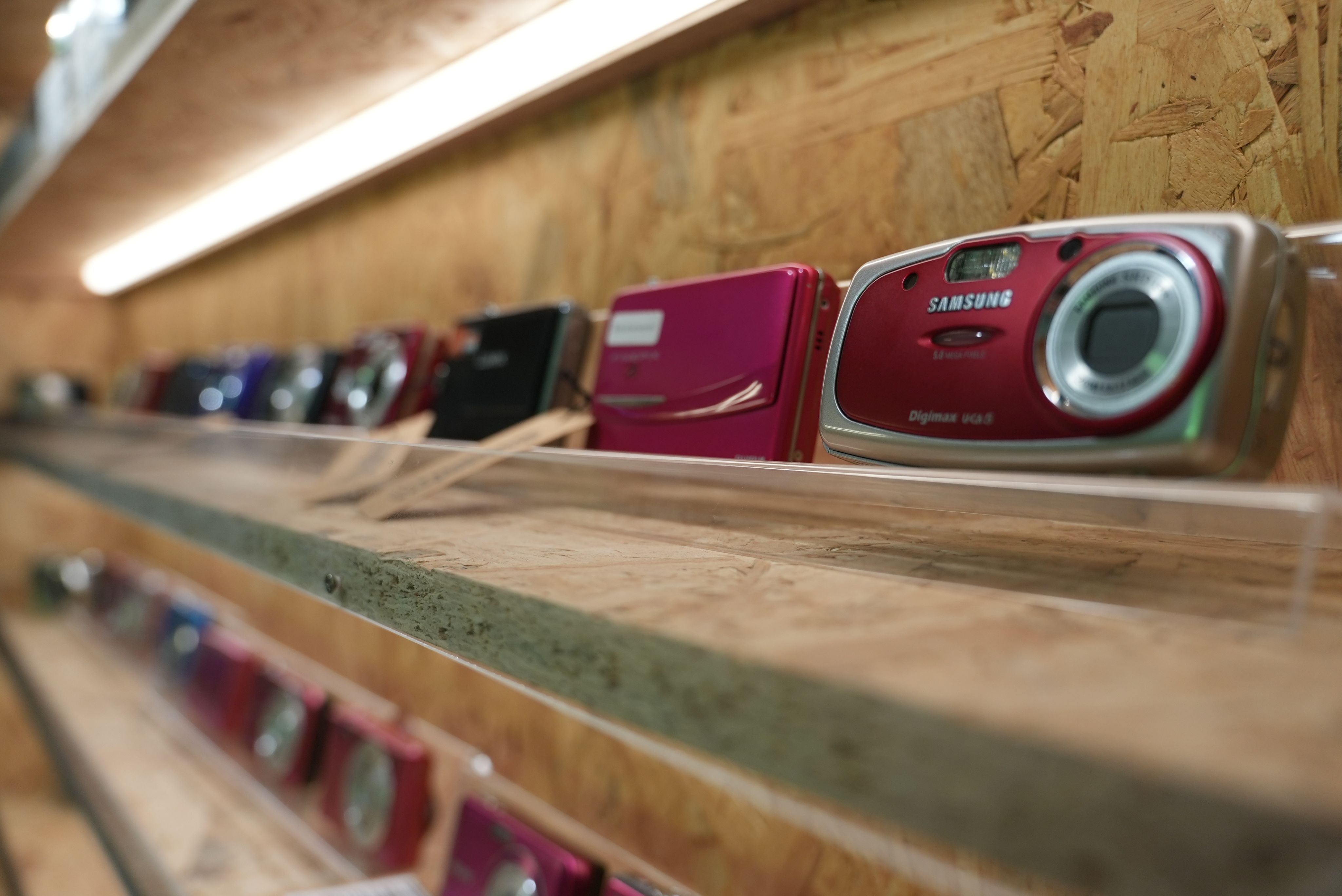
Colourful cameras grasp attention behind dull shelves. Photo: Stella McGann.
Colourful cameras grasp attention behind dull shelves. Photo: Stella McGann.
For them, doing business on Haji Lane is a risk worth taking.
After all, it wouldn’t be the first time independent businesses had saved Haji Lane.

A small difference
Haji Lane was born into a sacred space.
The small alley in Kampong Glam was established in the 1800s by Arab immigrants, reflected in the name ‘Haji’; a term for a Muslim man who has accomplished the Hajj pilgrimage to Mecca, a deeply spiritual duty and fundamental part of the Islamic faith.
Shophouses on the strip served as lodges for those who were about to depart on the journey, and pilgrims took up jobs as Hawkers in the interim.
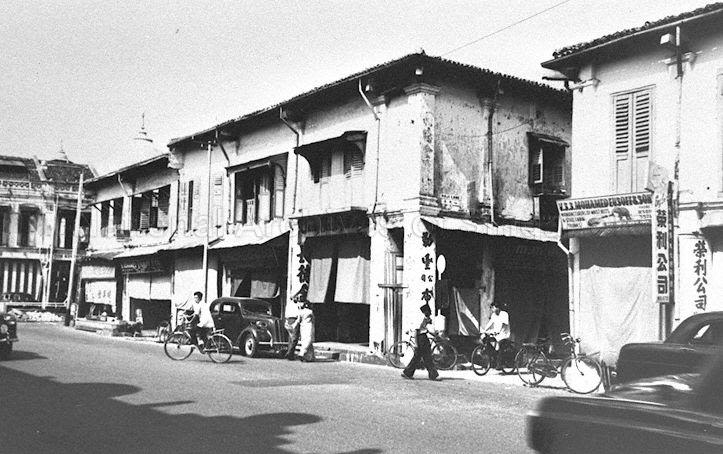
By the 1960s, as travelling became more accessible, people no longer needed a place to stay before the Hajj. Haji Lane then transitioned into a residential area for low-income Malay families, and it wasn’t long until they left either; By 1970 most buildings had replaced life to be used for storage or were altogether abandoned.

Entrance of Haji Lane from North Bridge Road, taken in 1963. Photo: National Archives (Singapore).
Entrance of Haji Lane from North Bridge Road, taken in 1963. Photo: National Archives (Singapore).
By the 1980s, a transformation was needed.
A place once seen as beginning of the Hajj now lay dormant, the only sparks of culture left was the sun reflecting off the windows of the Peranakan-style shophouses.
Change began gradually, not with power and money, but with the efforts of a few small businesses. Culture was rebuilt with brush strokes from artists, and fabric from designers. Independent stores, each with individual styles and ideas, filled the once-empty shophouses, and attracted the likes of younger generations.
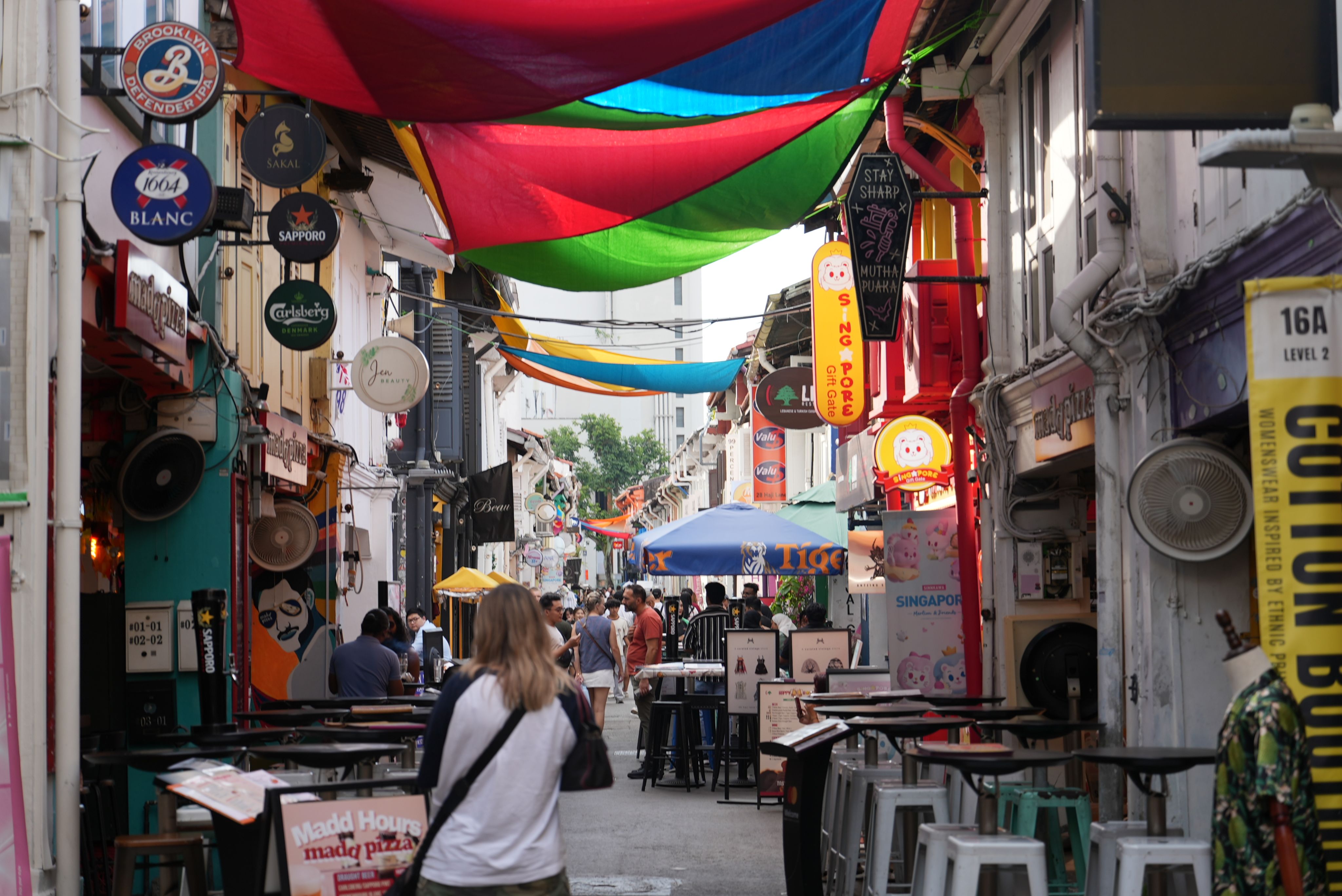
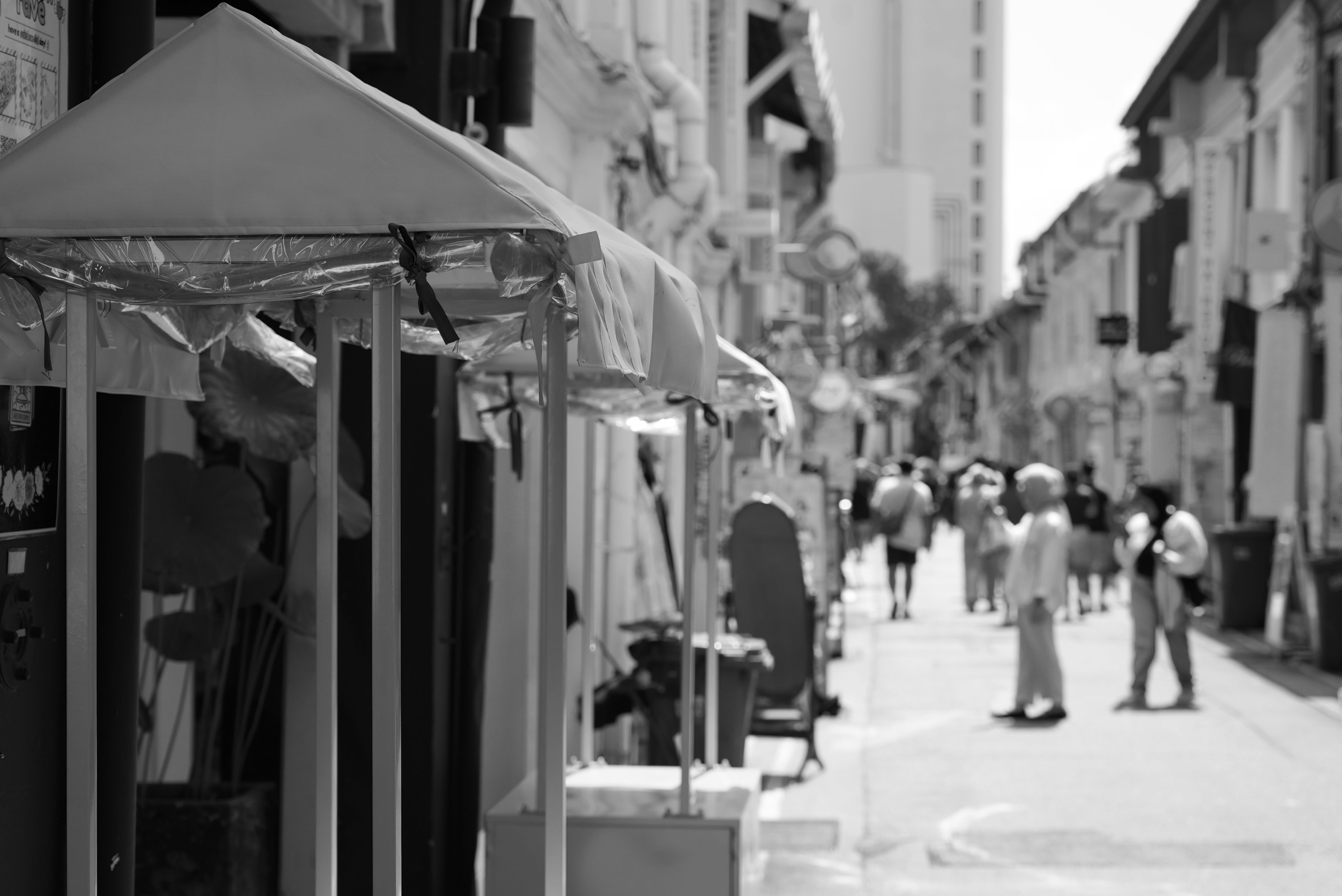
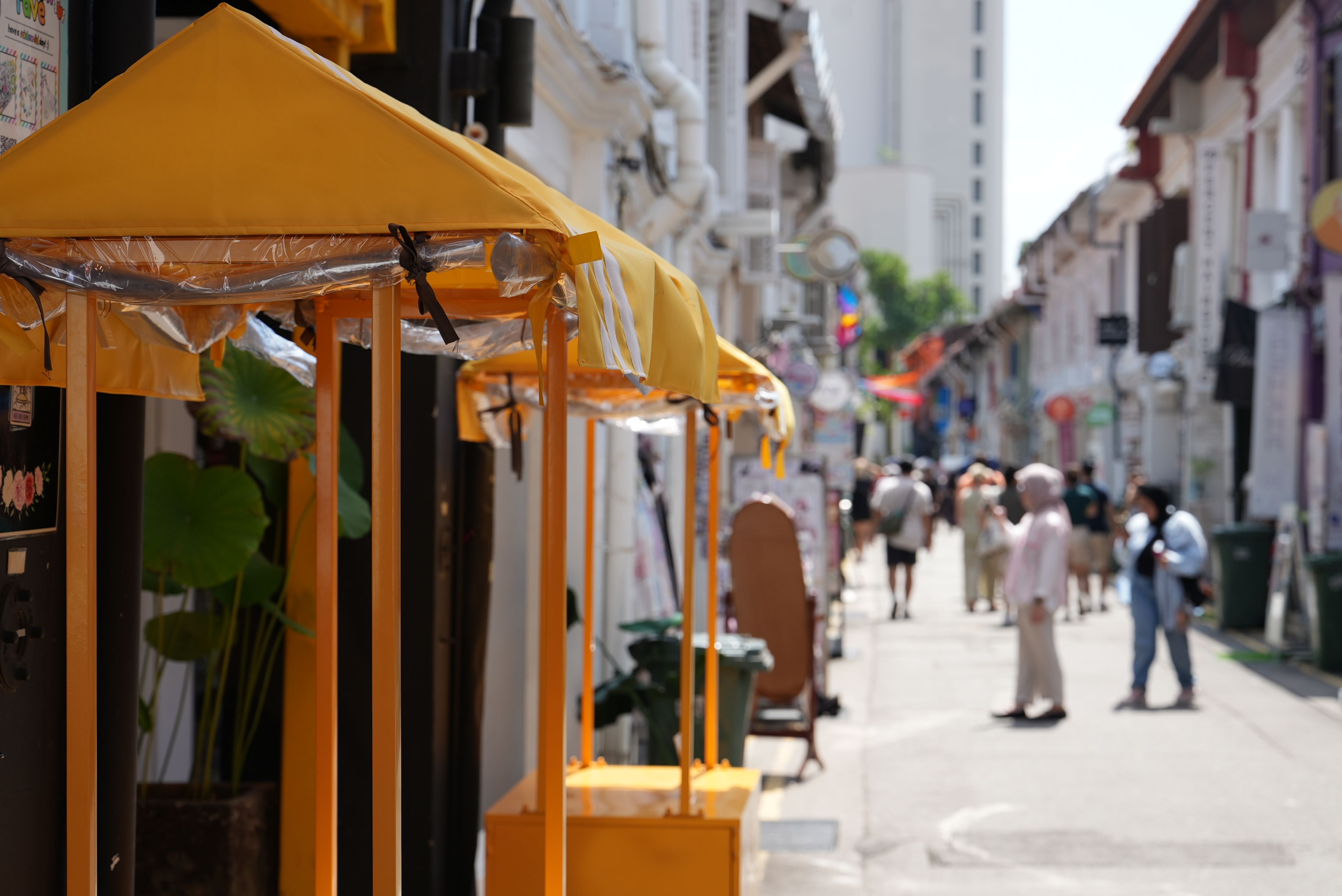
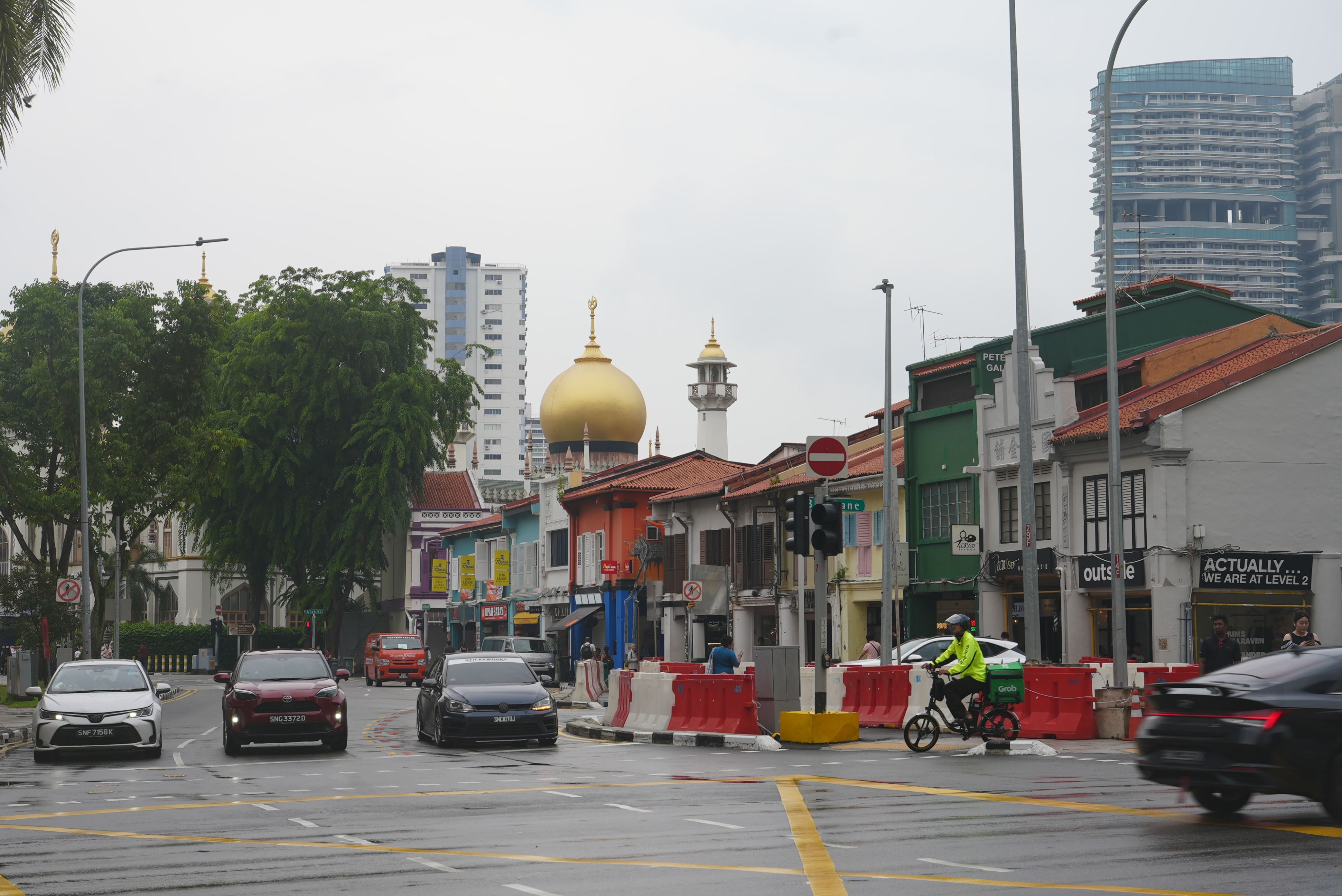
Present-day Haji Lane. Photo: Stella McGann.
Present-day Haji Lane. Photo: Stella McGann.



By the early 2000s, Haji Lane had come back to life.
The heart of Singapore started beating again.
While Haji Lane has thrived in recent decades, In the last 2 years the strip has been taken over by bigger businesses, being gentrified under the guise of ‘urban revitalisation’. Rent prices are now increasing, and only the big businesses can afford to stay on the strip.
What appears to be a vibrant, lively place has for some quickly become a hollow shell again, seemingly pleasing only the passing tourists. Similar to the 1970s, Haji Lane has hints of heritage in its traditional architecture and the few remaining small businesses, but it’s a battle every day to upkeep the little life that is left.
Keeping the needle on the record
One business which has managed to stay on Haji Lane is Musicology Records, a small music store that sits behind glass doors.

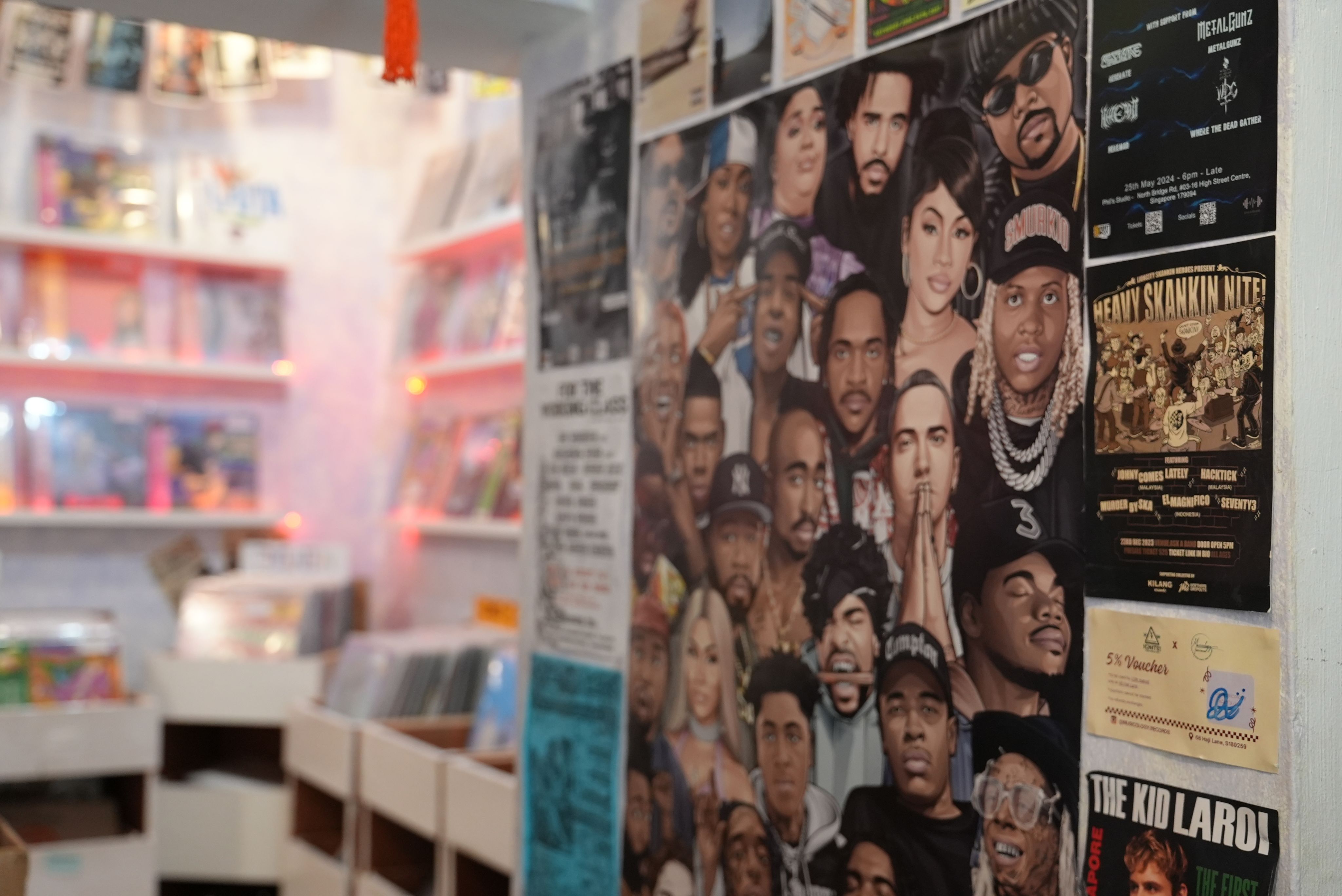
Walking into Musicology Records, you are greeted with a sense of nostalgia, as the vinyls on the shelves and posters on the walls are reminiscent of a teenager’s bedroom in a 90’s coming-of-age film. It’s hard not to fall in love with it; As you eye the records stored neatly in boxes, half your time is spent shopping and half is spent simply admiring.
It was therefore no surprise when Terrance Choong, a part-time worker at Musicology Records, said he had been a fan of the store two years before he even started working there.
Like Mr Chu and Ms Kylie, Mr Choong says Musicology records has made a name for itself despite the high costs to rent on Haji Lane.
While Mr Choong works on Haji Lane multiple times a week, he says he would never willingly visit because of its lack of culture.
“This place, it’s very expensive, and you know, for us to be able to be around for quite some time, I’d say that’s a pretty huge success.”
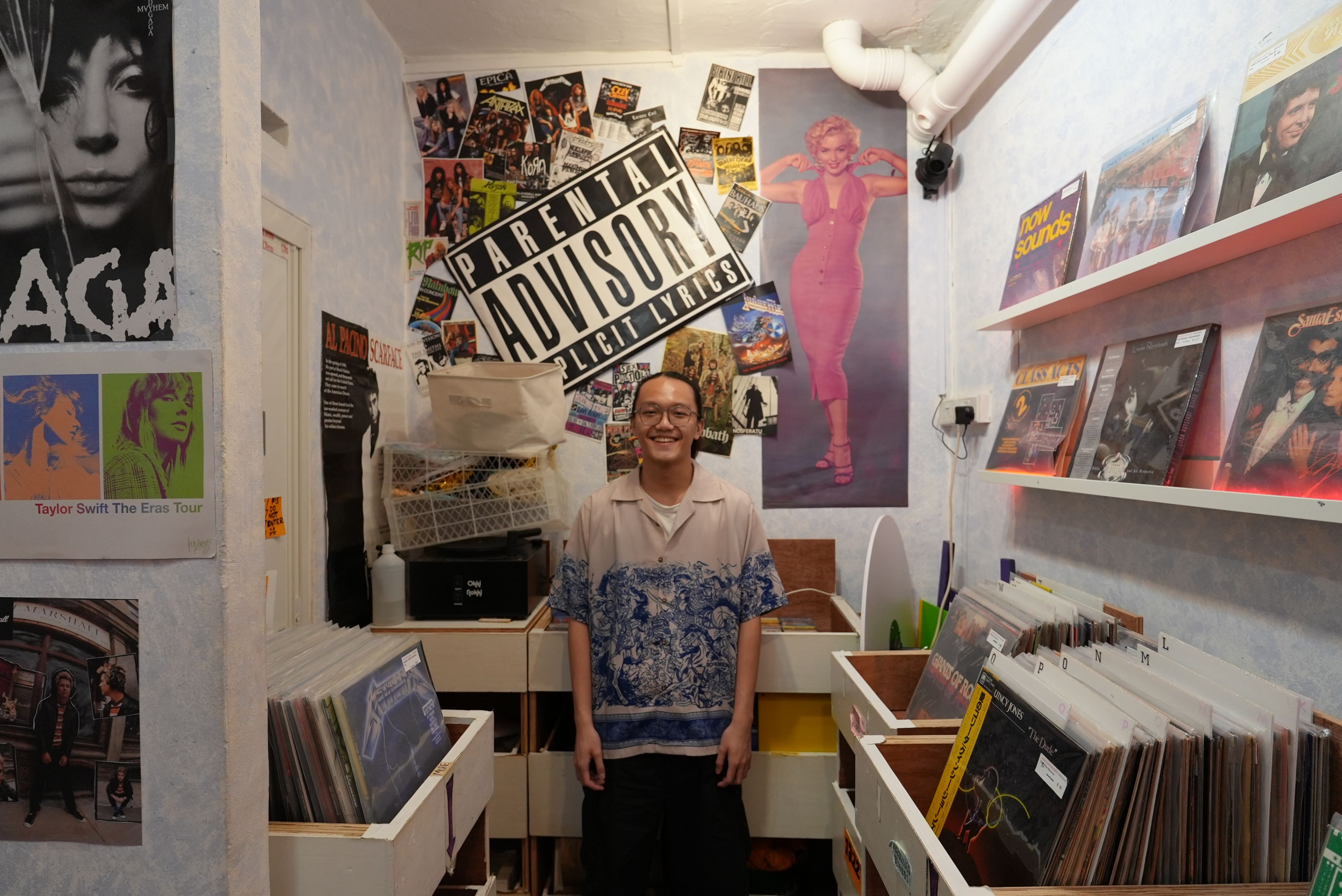
Mr Choong smiles as he's surrounded by diverse vinyls. Photo: Stella McGann.
Mr Choong smiles as he's surrounded by diverse vinyls. Photo: Stella McGann.
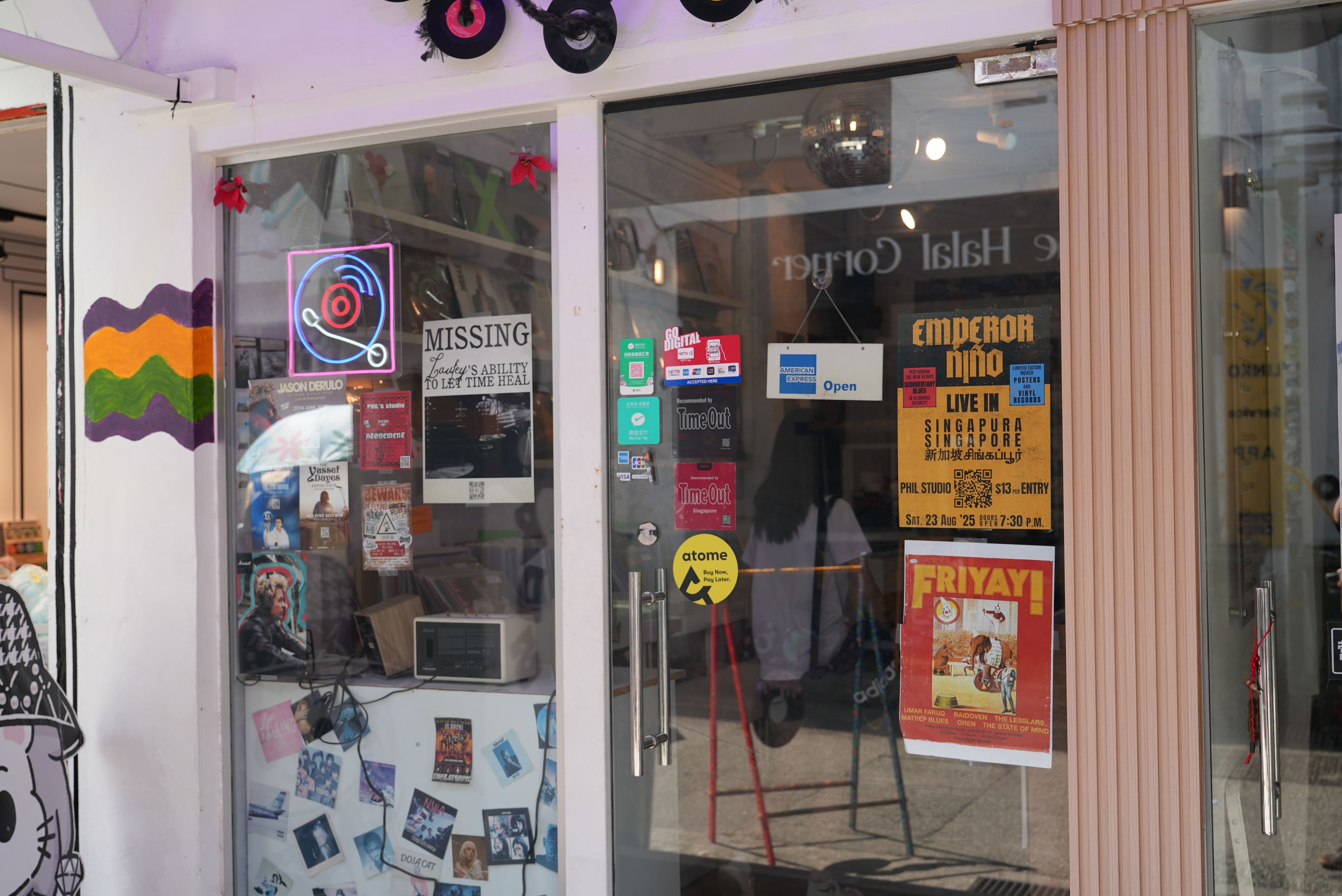
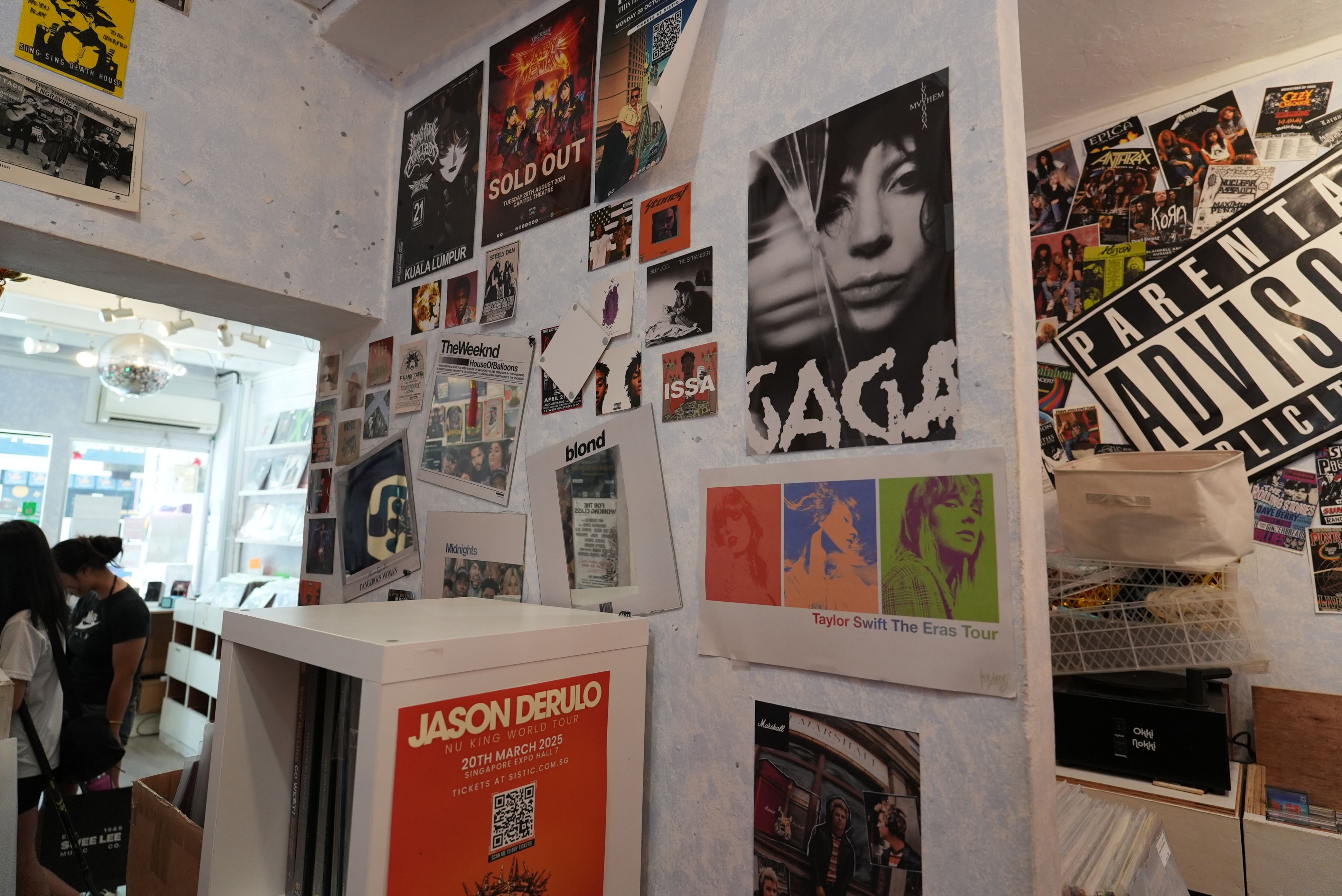

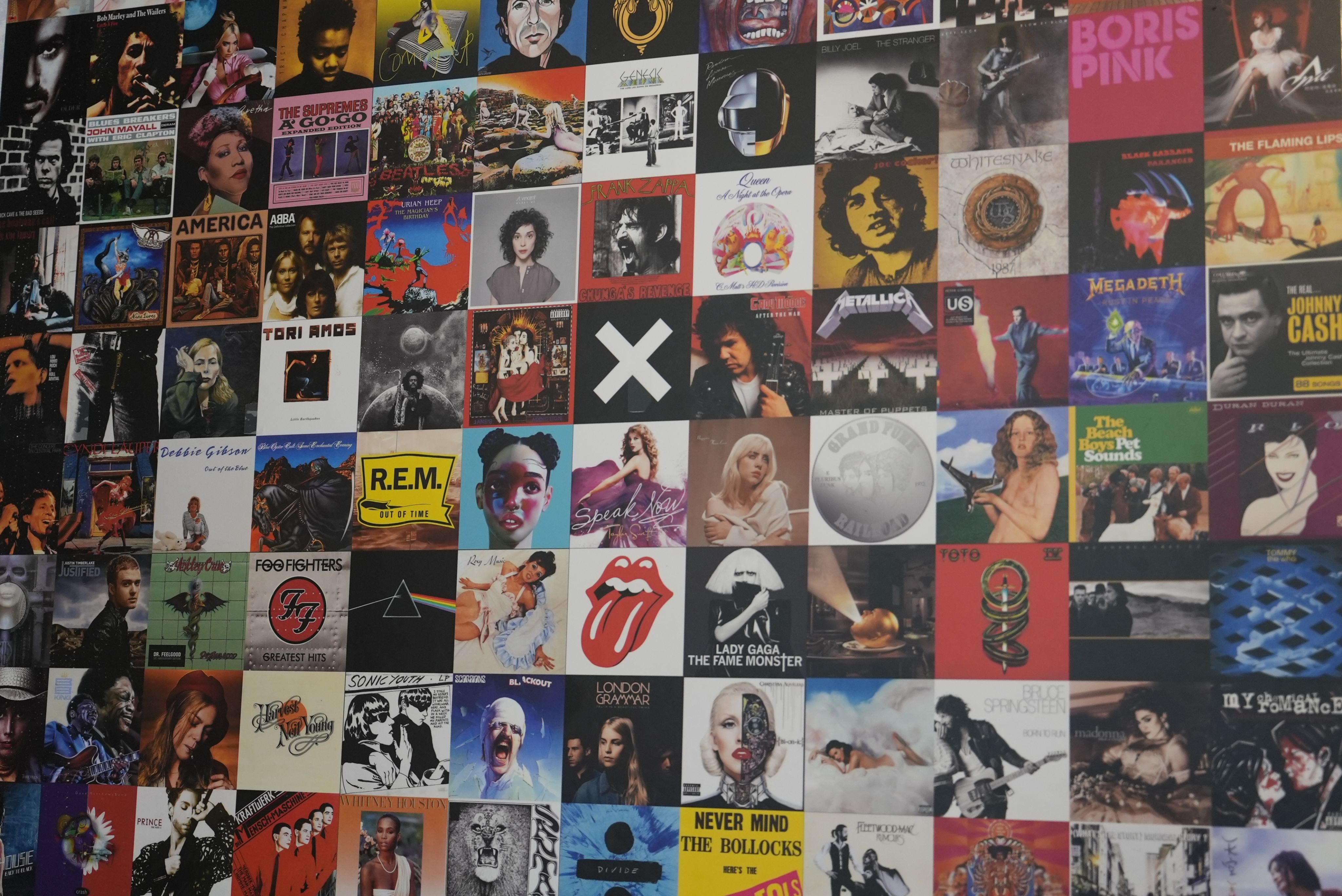
Mr Choong leans back in his chair and shares his experience on Haji Lane while tourists walk in and out of the store, flicking through records separated by genre.
He looks past the camera and out the glass doors, watching a group of people posing below the colourful canopies for a photo.
“This place has become victim of gentrification. Even when I first came here, like two years ago, and sure it was still like a tourist hotspot, but it wasn’t to this extent. There was still culture, there was still somewhat of a community. But right now, it’s dead.”
When you are sitting in a room filled with such colour and life, present-day Haji Lane appears to be a mockery of culture.
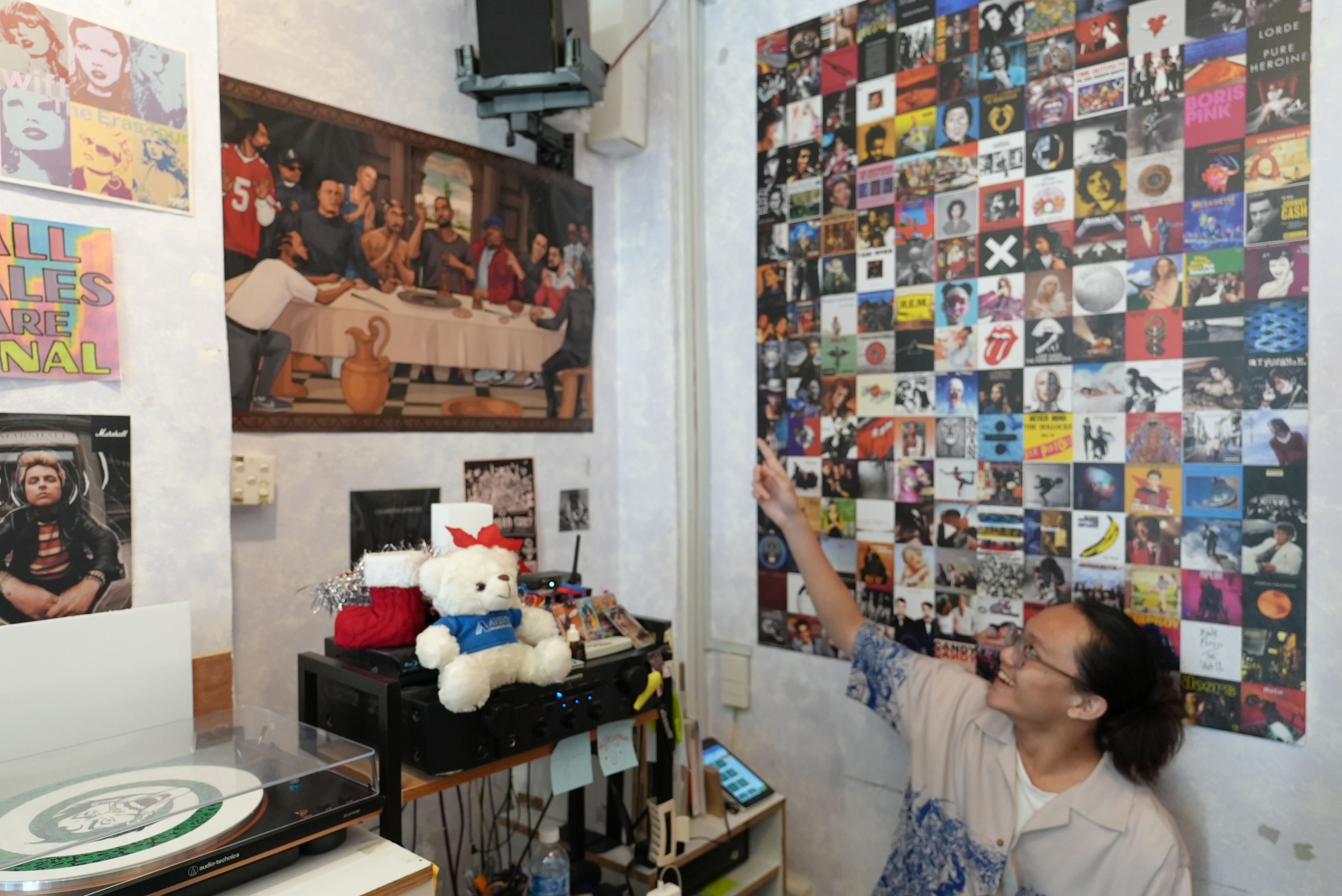
Mr Choong points to one of the many posters that cover the walls of Musicology Records. Photo: Stella McGann.
Mr Choong points to one of the many posters that cover the walls of Musicology Records. Photo: Stella McGann.
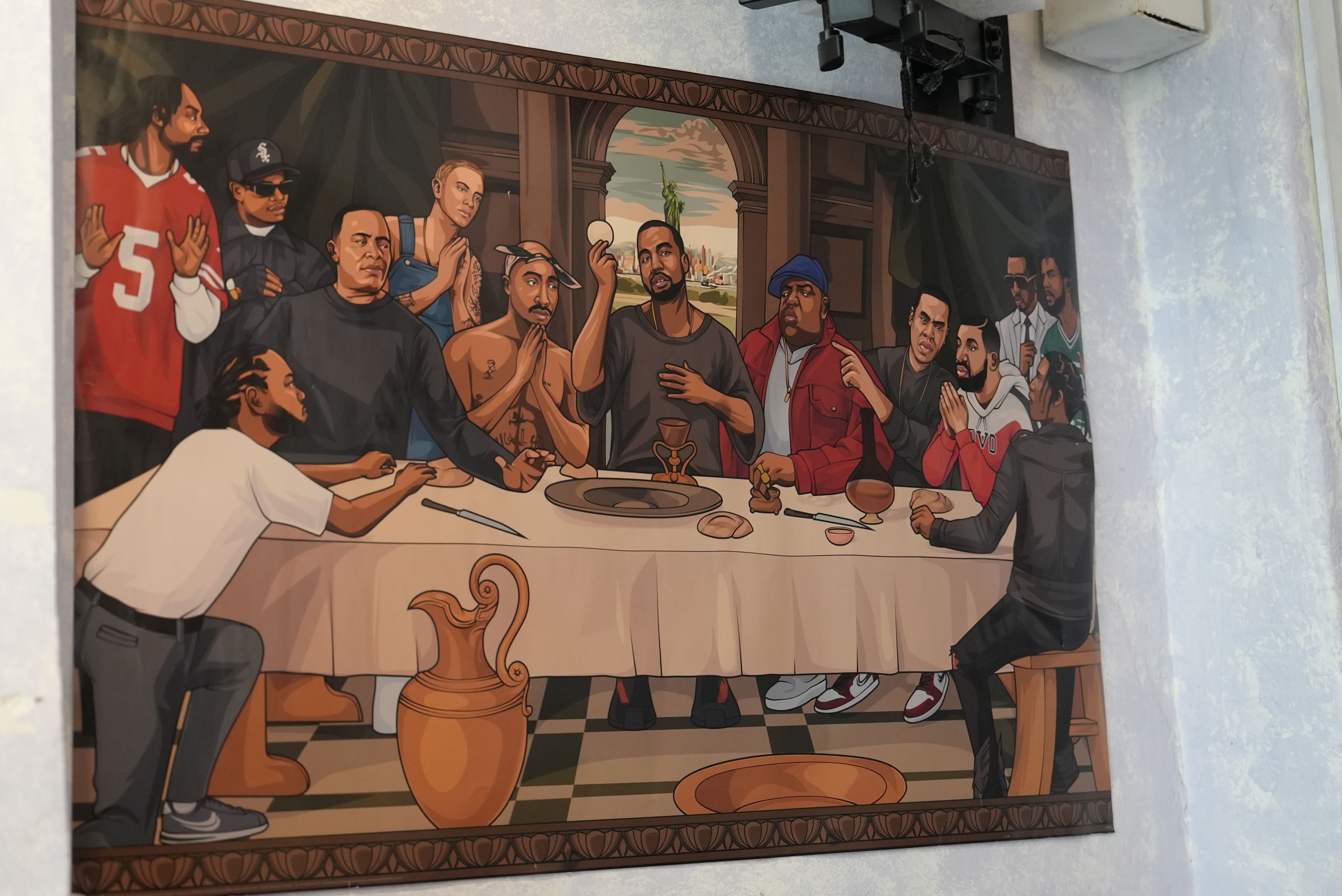
A closer look shows a reenactment of 'The Last Supper' with rappers instead of disciples. Photo: Stella McGann.
A closer look shows a reenactment of 'The Last Supper' with rappers instead of disciples. Photo: Stella McGann.
A universal issue
The decaying spirit in Haji Lane is a bleak story to tell, but according to Dr Vanessa Hearman, it is a story all too common.

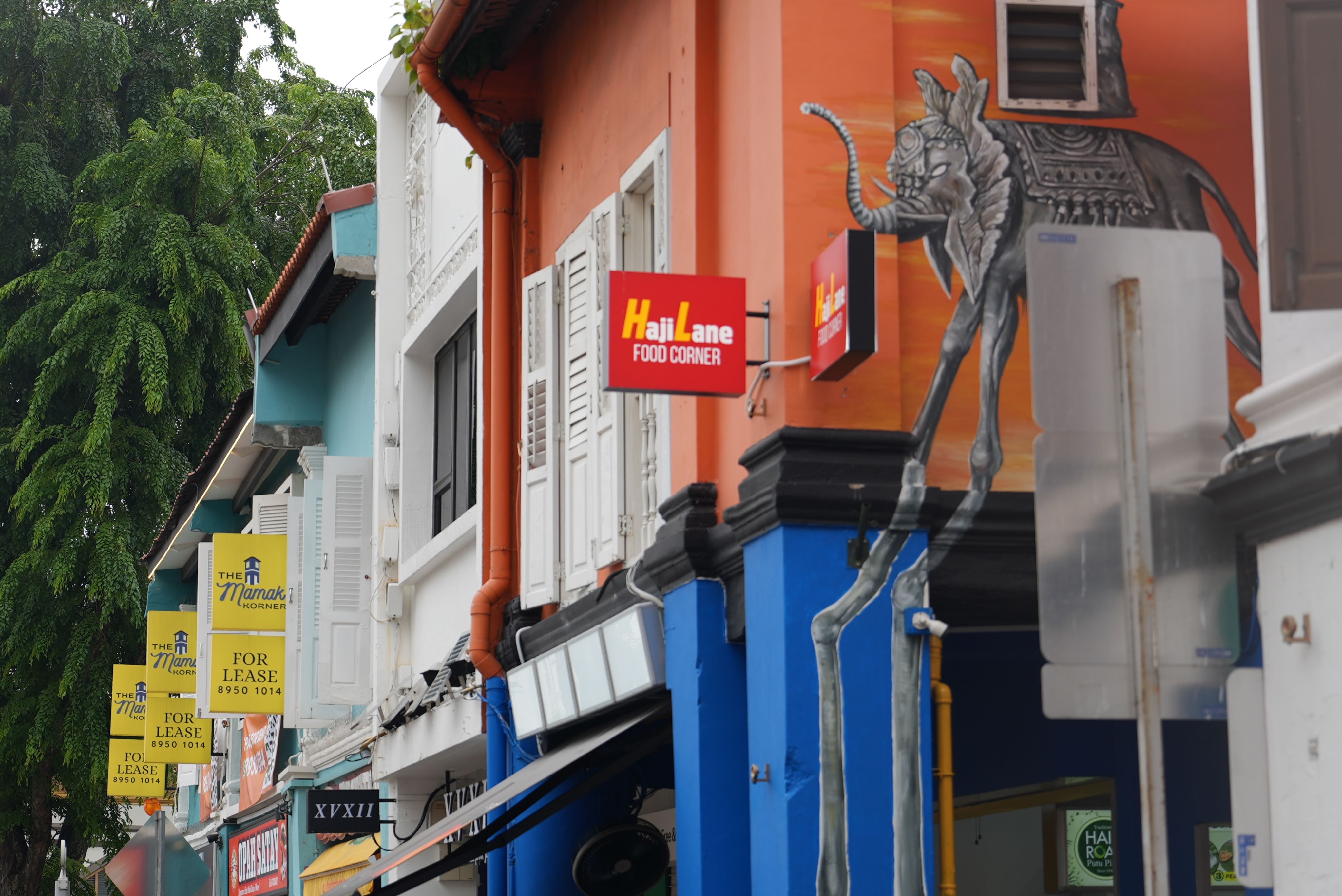
Dr Hearman has been a senior lecturer for history at Curtin University for the last five years. While she discusses the changes in Kampong Glam, she says gentrification is a universal experience.
“I mean it's almost like a worldwide problem, isn't it? You know whether it's Barcelona, or Paris, or Madrid. It’s these places which are very interesting and have a lot of history and community that mass tourism is having this effect of pushing up rent prices, and pushing out the real people from these areas where they can no longer afford to live in them.”

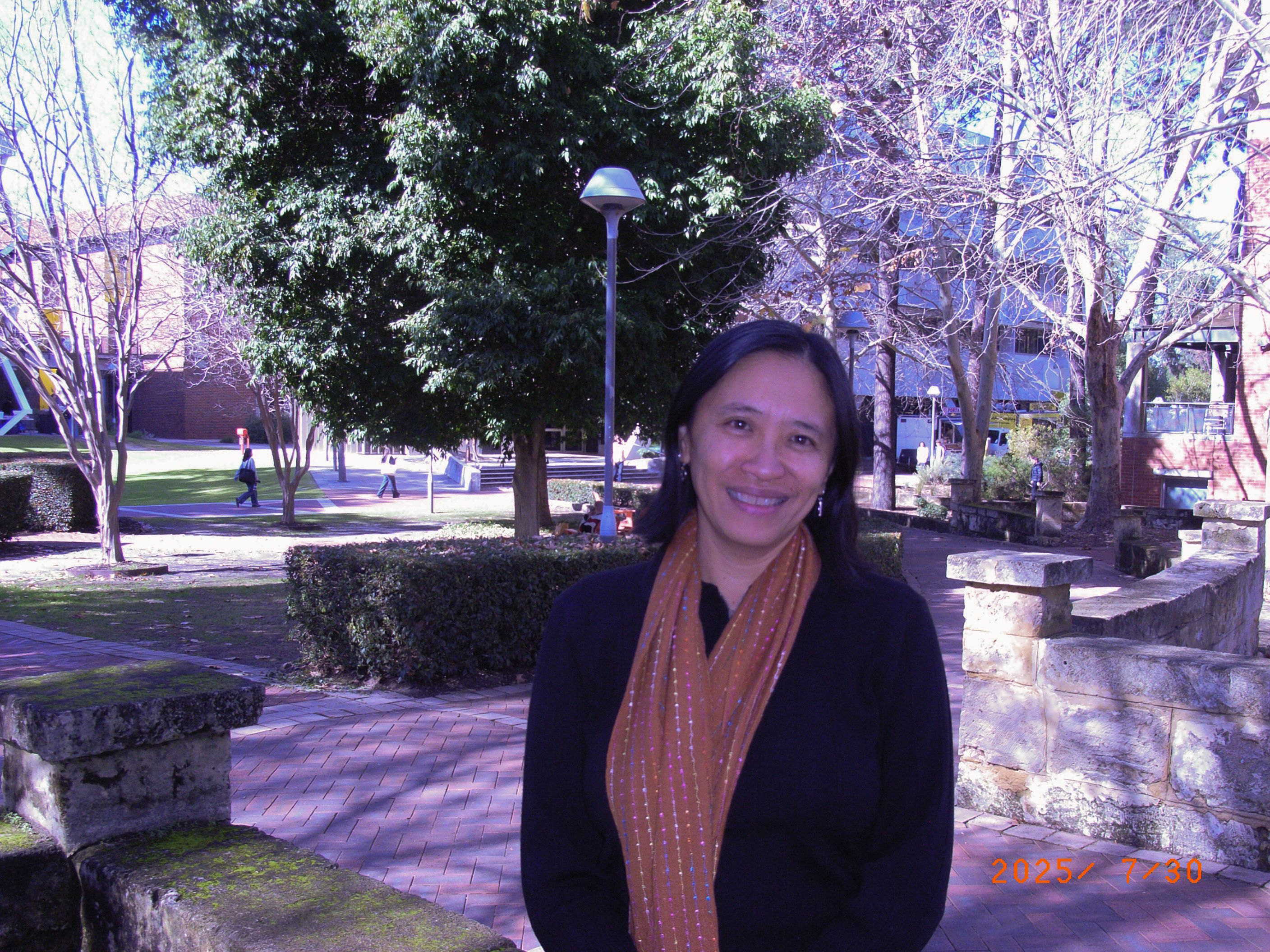
Dr Hearman poses in Curtin University's Bentley Campus, where she has taught for five years. Photo: Stella McGann.
Dr Hearman poses in Curtin University's Bentley Campus, where she has taught for five years. Photo: Stella McGann.
As Dr Hearman states, gentrification in places like Haji Lane is an ongoing cycle. Towns or cities, or even small strips are ‘rejuvenated’ for aesthetics and beauty, but it can lead to areas becoming so expensive that community, spirit and culture is left by the wayside.
“So it is a question of that you make a place interesting so tourists will visit, but you end up killing the culture because the rents are no longer accessible for those, you know, actual living breathing communities to continue to live there.”
“Is revitalisation just the euphemism for just getting rid of the people?”
Curiosity is key
With the issue of mass tourism and gentrification spreading across the world, what can be done to solve this?
How do we pick up the pieces of community and put it back together again?
According to Dr Hearman, we can’t change what’s already been done.
“That’s a difficult one, because to certain extent there is tension in terms of heritage. As a historian, I know we can't hold onto certain things forever. We can't say “this has to be protected” and “everything needs to be kept the same” because we're only too aware that there are processes of social and historical change going on all the time.”

Dr Hearman a historian of South-East Asia, and has taught history across Australia. Photo: Stella McGann.
Dr Hearman a historian of South-East Asia, and has taught history across Australia. Photo: Stella McGann.
The displacement of community and independent businesses has left an impact on the alley that cannot be undone.
Chatter which once filled the vibrant strip is slowly being replaced with clicks from phone cameras, and scents of different cuisines disappear as souvenir stores take hold.


But while we can’t bring back the past, Dr Hearman says there’s one way we can change the future:
By being curious.

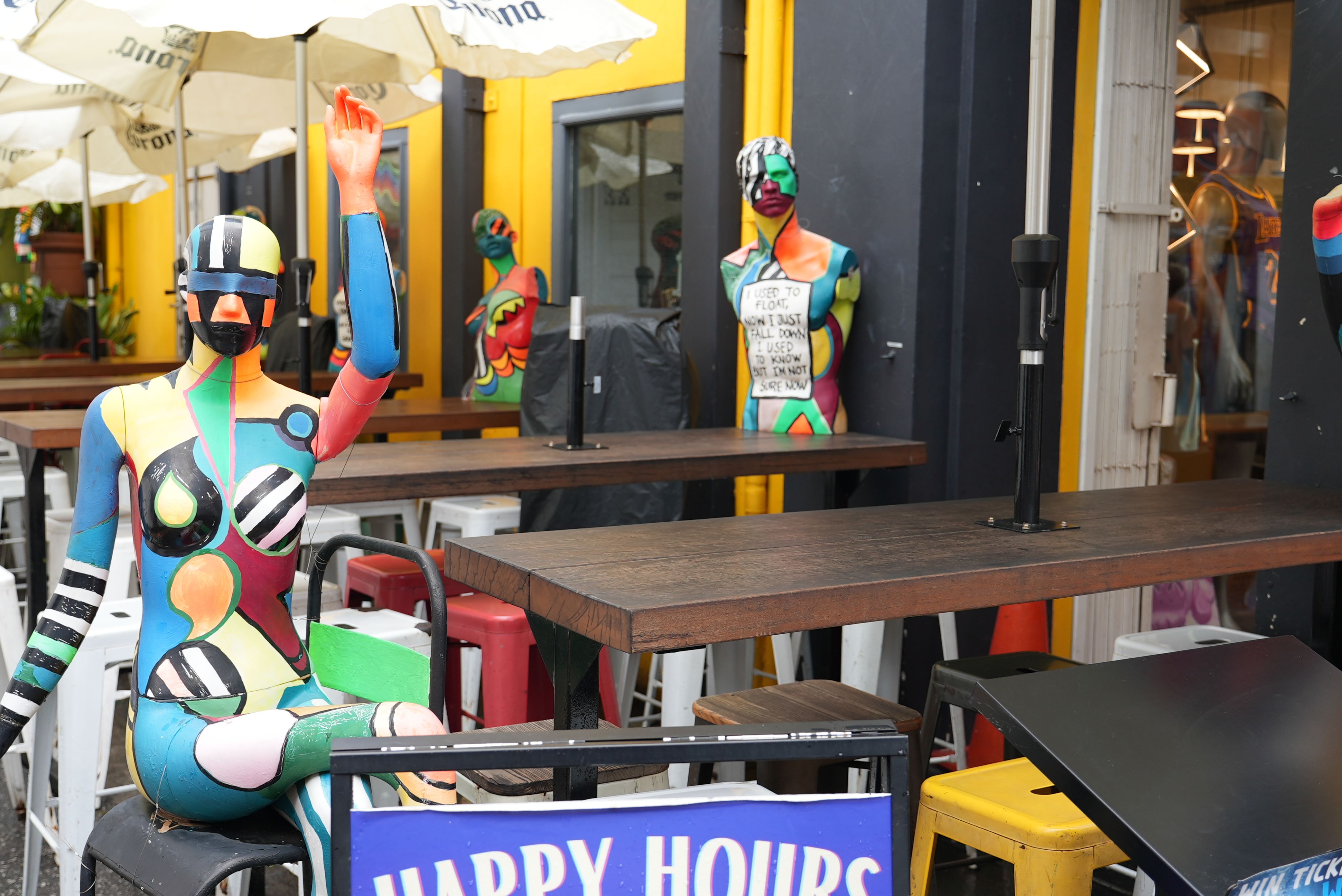
“I suppose that's a challenge that we should kind of throw ourselves when we go someplace because you know we lament tourism but often we are part of it as well. We're part of the problem too, right? So how can we make a difference to the places that we visit, you know, what have we done to bother to find out? Are we making a positive contribution in some way, whether that's getting to know a local person, finding out history about a place or making friendships? I think it's really important.”
 Built with Shorthand