
Man,
I feel like a woman
Apprehension mixes with excitement as she separates her hair into sections; one for every charity sponsor. The room is full of the people who donated, each of them walking up, grabbing a pair of scissors and triumphantly cutting off a clump.
Her boyfriend hasn't showed up.
She watches strands of hair grown carefully over years float ethereally past her shoulders, forming a halo around her as they settle. The razor travels across her scalp in a sharp, clean finish.
But amid the pride of her accomplishment, one thought surfaces above all others.
“If I break up with my partner, what man is going to want to date me?”
It was this thought that made Karri Johnston realise just how much she had been centring men in her life. She knew something needed to change.
And she’s not the only woman coming to this realisation.
Decentering men is the practice of shifting a woman's focus away from patriarchal frameworks and towards prioritising her own needs, wellbeing and desires.
Coined by author Sherese “Charlie” Taylor in her 2025 book Decentering Men, the term encourages people to reflect on their own personal frameworks, recognise the ways men are prioritised, and reorient them so their own desires are put first.
To-be-looked-at-ness
For Karri, the process of decentering men came after realising how often she was treated differently because of her gender.
She was once working on a golf course, dressed the same as everyone else in her role: an oversized green t-shirt and khaki trousers. Working aside her male boss on one of the tee-ing areas, he says, “Beautiful day, isn’t it?” to a few older men walking past. Instead of a simple yes or nod in agreement, one of the men walking past looks at her and replies, “Oh yeah, especially with one like this around”.
Recognising the difference between men and women in the working world was a major part of Karri Johnston's experience. Photo: Stella McGann.
Recognising the difference between men and women in the working world was a major part of Karri Johnston's experience. Photo: Stella McGann.
"There was no violent kind of undertones or anything, but it was like a spotlight had been put on me. It was like, you're the different one,"
"It started becoming very obvious, the differences of how I would be treated and spoken to and how they would be treated and spoken to," she says.
Changing her physical appearance felt like the first step towards decentering men from her life. At first, it was a few face piercings, testing out different styles. But it was the moment the razor took the last of her hair that she truly recognised a difference.
"Nothing about myself had changed, but the way I would be perceived by people was completely flipped. And feeling comfortable with this was certainly something, but since then I have embraced more of how I want to look, regardless of how these things may be perceived by others, particularly men."
As Karri moves her head, sunlight catches her septum ring. Her warm, quick smile reveals a smiley piercing, while her shaggy, deliberately styled mullet falls around her shoulders. It's grown out from the shaved head that marked such a significant chapter in her life.
Karri is very different to who she was a few years ago. Now, she feels free, and encourages not only women but also men to take the same journey.
"I think it would benefit individuals and society as a whole. Especially men as well would benefit because it would help them step out of this feeling of, I need to be needed, and move towards a more individual self, I suppose, rather than an identity that's built off being needed traditionally," she says.
"I think it will be very freeing for them to have that expectation of having to behave a certain way, to be manly, removed. Being charismatic isn't a bad thing."
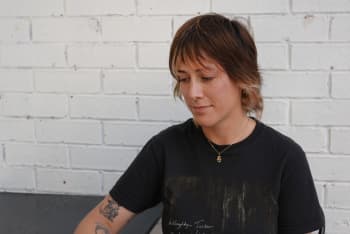
"I'm me, this is how I present myself, and whether that's appealing to others is not my concern."
Finding true North
For Karri, decentering men began with questioning how others perceived her.
But those expectations can run much deeper than appearance. For some women, they're embedded in the roles they've been taught to play from childhood.
Rumbie Kauta wants to talk about eldest daughters.
The Perth-based women’s counsellor has been on the front line of crisis and violence.
Her work with abuse victim-survivors has involved adults and children, in crisis centres, high schools and higher education.
Her work puts her in the room, opposite women who are “emotionally overwhelmed, burnt out, or disconnected from themselves while still functioning highly in daily life”. These women often carry everything on their own, burdened by empathy and responsibility. A trait she says eldest daughters so often embody.
Rumbie puts them on a path back to themselves.
"It does take a lot of work because, for example, a lot of the strong women or eldest daughters have been conditioned to be the woman in the family that does the cleaning, the cooking, and does things to look after the men and everyone else," she says.
Have you ever been sitting alone on your phone or reading a book, and found yourself fixing your posture or changing your position so you look flattering? Attempting to look good while no one is around?
Over time, societal standards can lead women to internalise and apply the expectations they see around them. This experience, which Kauta says begins in our youth, is known as the internalised male gaze.
"You are a woman with a man inside of you. You are your own voyeur."
These expectations can become so ingrained through social norms that women may not even recognise their influence.
"We've been taught as young girls, how to present ourselves, so much so that we kind of feel like that's normal and that's like our voice perhaps, but it's not our voice.
"If you think about the women that were in the boomer generation, a lot of them stayed in relationships because they could not financially afford to leave, a lot of women stayed because maybe they didn't have the education. They didn't have a lot of support maybe, because female friendships make a massive difference. Whereas now we're in a position where we are more independent. We have our own finances. We have a our own friends. We might have a big community of people that are going to support us if we were to leave a bad situation. So now we are actually able to say, do I actually want to be with this man?"
According to Kauta, the process of decentering men can often feel like a lost cause. With so much of everyday life being male-centred, it can be difficult to know where to start.
From her experience, the best way to begin is to ask yourself one question.
What is it that I want?
Kauta says, asking this question alone can be life-changing.
"I think a lot of women tend to end up in really toxic relationships because they're thinking I want to be liked by this person. I want them to treat me like this, whether it's treating me with kindness or respect, and they don't do that for themselves," she says.
"I wish men knew it's not that women don't love them or they don't want to date them, but its women prioritising themselves, their identity, their friendships, their ambitions, their interests. It's actually helpful to have that woman love herself more than you to some degree because then she's a better partner. She's a better wife. She shows up better than she would if she was centring you."
Choosing herself
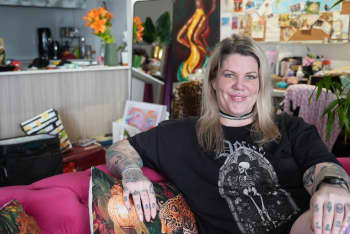
Walking into Zoe’s high-rise apartment, the maximalist interior reflects her pride in who she is. Pink and green walls hug the lounge room, while countless pillows and books are nestled on her couches. Her entire home is filled with little trinkets that reflect her personality.
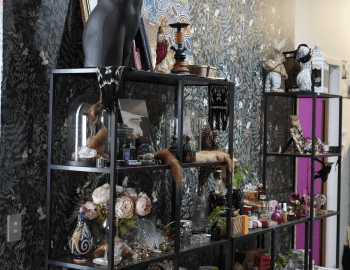
Living for herself hasn’t always been easy. After 18 years as a sex worker, Zoe has seen firsthand the unfair treatment women in the industry experience.
Zoe recalls idly scrolling online several years ago and coming across a news article about a woman who had filmed a porn video with one of her clients. As someone who has also filmed with clients, this wasn’t unusual for Zoe.
When she saw the woman in the article had been killed by the client, Zoe's stomach dropped. And then she read the comments.
"Is that video on her site?"
"I’d love to watch that video."
She was horrified.
"I know for a fact that if anything ever happened to me, because of my history of drug and alcohol use, because I'm a sex worker, my mental health, it's only because my parents are middle class, white people that anything would be done. I know that for a fact because they would fight for it, whereas I would just be another person, a statistic," she says.
"You're the ones consuming this. You're the ones who want porn. We're giving you what you want and somehow, we're cursed. You’re cursed if you do, cursed if you don't."
For Zoe, navigating her place in society was a difficult venture. Working in an industry aimed to please people, often men, led her to centre male figures in her personal life as well.
In her journey of decentering men, she has spent the last year reflecting on her personal relationships to make sure she's not pushed to the side.
For Zoe, having strict standards for the men in her personal life isn’t selfish or demanding, but necessary for her own freedom.
"I started with the baseline that I want dignity and respect. Thats the baseline. Then the next thing I want is appreciation, because I do a lot for the people I love and I want to be appreciated, and then the next step was I want equal division of labour. I know for me that should be the baseline, but for society, those are very high standards," she says.
"I've decided after that relationship that no matter the potential I saw in a partner, if you have work to do, come back to me when the work's done.
Working with mostly male clients, it was tricky for Zoe to decentre men in her personal life. Photo: Stella McGann.
Working with mostly male clients, it was tricky for Zoe to decentre men in her personal life. Photo: Stella McGann.
"I’m not a construction team anymore. I have been my whole life, and I’m not interested."
Software update
The expectations Zoe has spent years challenging are also reinforced through the media we consume.
Curtin University Professor of Internet Studies Tama Leaver says popular culture plays a major role in shaping our identities.
"The internet is probably our dominant form of popular culture today, and popular culture has always played an enormous part in informing the way that people imagine each other, including the way we imagine gender, gendered relationships, and all other forms of relationships to be fair," he says.
The term ‘male gaze’ was introduced by film theorist Laura Mulvey in 1975, describing how women are often portrayed in mainstream film solely as objects of male desire.
But film isn’t the only media where women are framed through a male-centred lens.
For decades, advertising and other media have portrayed women primarily through their appearance and their appeal to men.
These portrayals can influence not only on how women are treated by others, but how they view themselves.
"Your teenage years are an absolutely critical part of your self-fashioning, that your idea of figuring out who you are in relation to other people. It’s a time of transition you look less towards your family and more towards others, whether that’s peers, but also role model figures in popular culture.
"If every second or third thing in your feed on Instagram or TikTok is misogynistic, then it stops feeling misogynistic. It probably feels more like the norm, and that of course is a huge problem, if your norms can shift in such a way."
Moving away from male-centred media can be a crucial part of self-discovery for both women and men. Leaver says recognising how media can shape attitudes and impact ideologies is particularly important for young people growing up in a digital world.
"I think we do need to help young people especially be aware of just how personalised and non-representative the sort of content they're seeing might be," he says.
"I think the fact that we're having a global conversation and recognising that these platforms have had too much stay in the sort of experiences and the shaping of young people's ideas. I think, you know, it’s an important recognition that we do need to do more to help young people be fully rounded digital citizens."
A different type of love
After spending an hour reflecting on past experiences as a woman in a male-centred world, it’s clear how far Zoe has come.
"I don't really care if you think I'm hot, whether you think I'm fat. It doesn't affect me. Whereas if someone called me selfish or self-centred or something, oh, I would be so hurt. Because those are things that really matter," she says.
"It's what my friends think and feel and what my family, to a degree, think and feel. That what's important to me, not what some random man thinks. Why would I care about that? That's crazy."
The journey of decentering men isn’t one that has an ending. While that may seem disheartening, women like Zoe believe it’s a journey worth taking.
After years of introspection and growth, Zoe’s energy and pride speak volumes. She’s excited for what lies ahead, whether there’s a man by her side or not.
"If I choose to have a man, I'm choosing to have you in my life because you bring something into my life. You’re there by choice, not because I need you. And to me, I think that's a massive flex. You're not needed. I'm choosing. I’m wanting you around."
 Built with Shorthand