
Lost on stage
Perth's musicians work in an industry generating more than $4 billion dollars to Australia's economy in a year, and one which sees some music from WA's capital become a global sensation.
But as live music venues are continuing to disappear, costs increase, and artificial intelligence presents a potentially existential threat to artists' work, many are refusing to let up.
"We lost our mosh virginity."
After years on stage, Perth keyboardist and vocalist Lachie Thomson, of indie band Little Guilt, still finds pleasant surprises on the job.
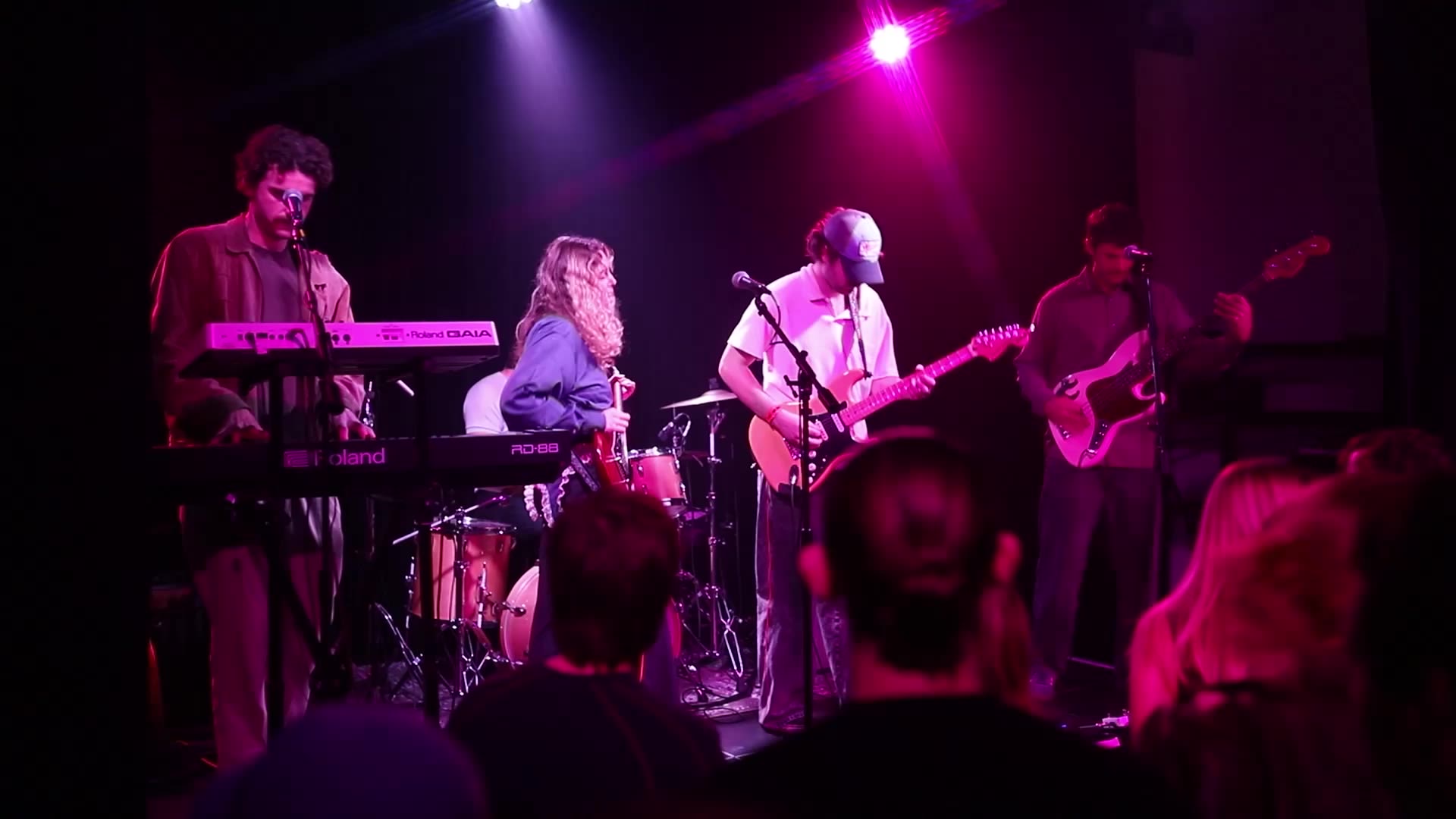
Nestled away on an upstairs stage in port city Fremantle's west end, above a country bar, the five-piece band is jamming to an adoring audience.
Wyola Bar is one of four venues at an annual West Australian Music (WAM) showcase, featuring dozens of Perth and regional WA artists.
As midnight approaches, pink and blue lights illuminate the 100-strong crowd as pumping synths and gritty guitars fill the space.
They're begging for another song. The night is buzzing, the air smells of beer and dry ice.
"It was a good five years in the making," Thomson says, reflecting on the band's first mosh pit.
"We're not very moshable, it was lots of fun."
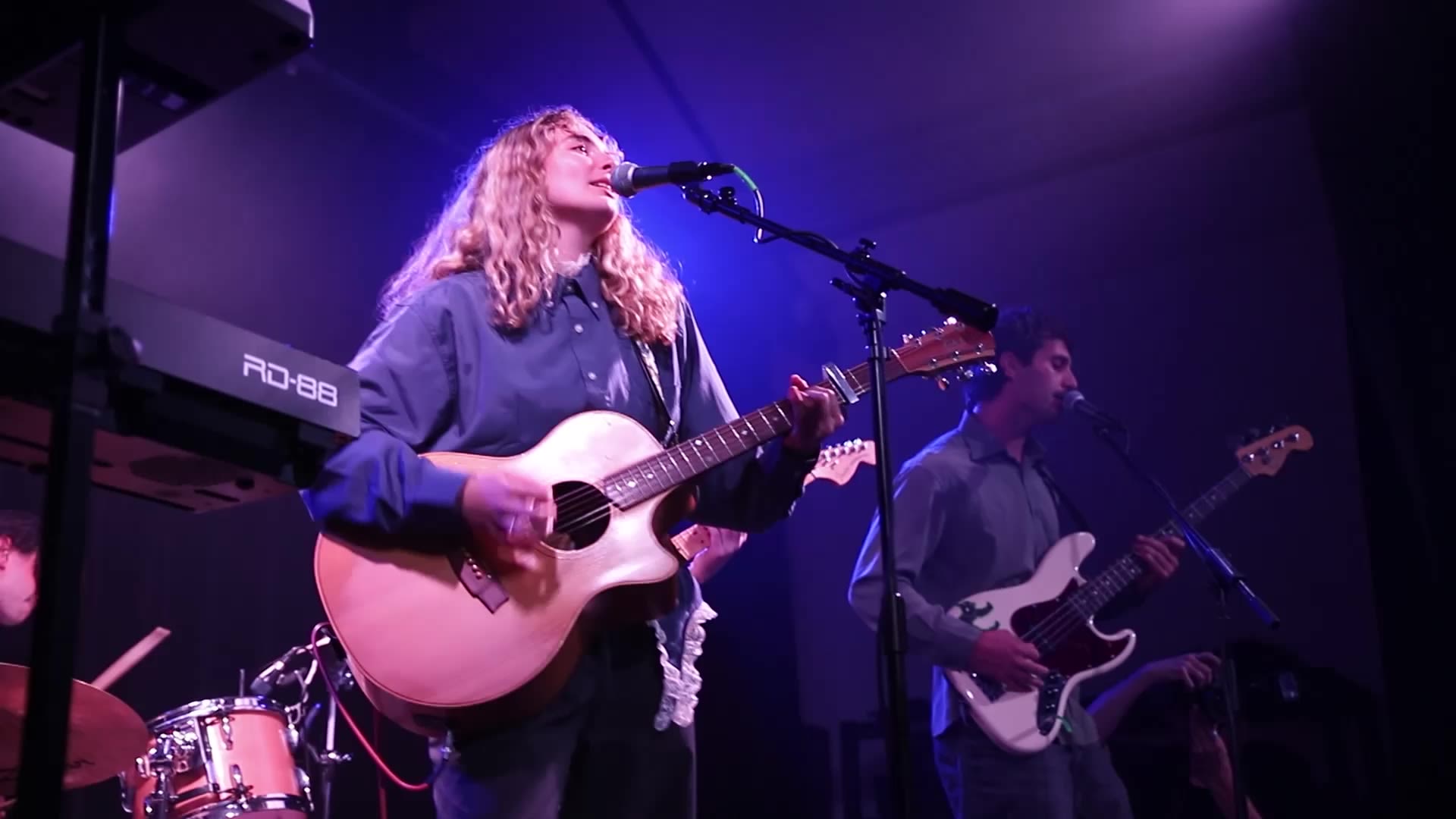
Lachie Thomson (left) and Ella Melton (right) are Little Guilt's vocalists.
Lachie Thomson (left) and Ella Melton (right) are Little Guilt's vocalists.
Hailing from Perth's southern suburbs in Mandurah and Rockingham, Little Guilt has found home closer to Fremantle, embracing the "tight-knit" music community in Perth.
"There's not as much bands or artists, there’s not as many people to compete with … compared to London, for example or even Melbourne," Thomson says.
Little Guilt's music has brought them from Perth, to the east coast, to Texas.
Little Guilt's music has brought them from Perth, to the east coast, to Texas.
"It's easier to get lost in the mud, so with Perth, it's good and you can come up together."
In the years since they formed as a "COVID band" rehearsing in Guitarist Joe Knowles' family home, the group has been on several national tours and made the self-funded voyage to South by South West in Austin, Texas earlier this year.
Joe Knowles shares the stage with Little Guilt's four other members.
Joe Knowles shares the stage with Little Guilt's four other members.
They're lucky to break even on these tours.
Thomson described the experience of performing in the states as being like a music showcase "on steroids".
Declining venues
Opening in 2026 in a heritage-listed building in Fremantle, the stage Little Guilt performed on was at one of the state's newest music venues, bucking a trend of disappearing live performance spaces more than 10 years in the making.
As the band's audience has grown, they've been exposed to more populated music scenes over east, and Thomson says it's brought home the scale of Perth's scene.
Mojos bar in North Fremantle is considered important in the growth of musicians' careers and has hosted the likes of Kevin Parker and Eskimo Jo.
Mojos bar in North Fremantle is considered important in the growth of musicians' careers and has hosted the likes of Kevin Parker and Eskimo Jo.
"We have Mojos here which is great, for up and coming bands for new artists, and Indi Bar as well, but there's just not that many around Perth, then you have like three or four choices really for a band of our size," he says.
"You go over to the eastern states and even though there's venues closing down over there, there's more choice."
A closer look at Perth's music venues reveals a measurable decline.
An audit by WAM from early 2026 found two-thirds of Perth live music venues which were open in 2015 had closed'or were no longer offering regular original shows a decade later.
The document found in 2015 there were 38 live music venues, but by 2026 a comparison of the same venues saw the number drop to 13.
This interactive map provides a snapshot of the music scene in 2015, contrasted by a 2026 map further down.
According to the audit, 10 additional music venues had opened since 2015 which were still running, while an additional 11 had opened since then, but have closed or were not offering regular live music.
The report defined "live music venues" as those with an average of two contemporary music gigs per week, or venues designed to be solely live music venues which did not operate for other purposes, like Red Hill Auditorium.
Since the report, another venue, Wyola Bar, has opened.
When adding the 11 new music venues to the comparisons, the figure still shows a 37 per cent decline, with 38 live music venues in 2015, and 24 in 2026.
In comparison to Perth's 24 remaining venues, an audit from the City of Melbourne found there were 227 venues featuring live music at least twice a week in 2026.
However the definition of a live music venue in the Melbourne report appeared to have a wider scope than WAM's audit.
In Perth, some notable closures include Fremantle's The Aardvark (2022), Badlands in East Perth (2023), and the Sewing Room in Perth (2023).
For WAM CEO Owen Whittle, the state's music punches above its weight.
"I'd argue that Australia's biggest creative export in the past 20 years in the whole country was a single album by Tame Impala recorded in Western Australia," he says, referring to 2015 album Currents.
"The scale and economic impact of what's being produced out of music, I think, is commonly not very well understood," he says.
"And it's a circular economy, what's spent on local music is then invested in local venues, local recording studios and local sound production, which then goes back to the artists and there's this cycle and that money washes around, it doesn’t go offshore."
Owen Whittle believes there is strength in Perth's isolation.
Owen Whittle believes there is strength in Perth's isolation.
He says the decline in live music venues has been global.
"I think in WA we managed to buck that trend a little bit up until about 10 years ago," Whittle says.
"It might have hit us later than other jurisdictions, but it hit us fast and hard."
Among higher cost-of-living pressures, audiences buying tickets later, and less money flowing to venues through alcohol sales, research has also shown a substantial increase in the cost of insuring live spaces — a 2025 Insurance Council of Australia study found a 60 per cent increase in public liability insurance for festivals and venues since 2019.
UK group Wet Leg performs at Laneway 2026 in Perth.
UK group Wet Leg performs at Laneway 2026 in Perth.
Earlier this year, St Jerome's Laneway Festival announced it would not return to Perth and Adelaide in 2027, with touring costs a factor.
More recently, all-ages festival Hyperfest and youth venue Y HQ Leederville also faced disruption.
Despite the broader decline in venues, Whittle believes the Perth music scene remains robust.
"I wouldn't say it's dying. The music is strong, the creativity is strong, the performance is strong, he says.
'It’s just that there's less places to perform it."
Whittle says investing in local music is important in a time where a lot of music in the industry isn't reaching artists.
Whittle says investing in local music is important in a time where a lot of music in the industry isn't reaching artists.
There is also research to suggest investing in local music goes into the wider economy — a report by advisory body Creative Australia published this year found the Australian music industry contributed $4.28 billion to the Australian economy in 2024-25.
Sweet tunes
One location not included in the WAM audit is a nondescript laneway beside an ice cream shop in the heart of Fremantle.
At least 100 people are gathering at this unique stage on a sunny late-winter Sunday afternoon, listening to the folky tunes of Lloyd and the Leftovers.
The gig, organised as a collaboration between Perth band Symmetrical dogs, two opening acts, and local ice cream joint Chico Gelato, attracts passersby young and old.
"It was one of my favourite shows that we've played on," says frontman Luke Lloyd Giglia.
"Being able to see everyone standing there, having people walking by.
'The catchment of that show, people who saw it were not people who would necessarily be able to go to a gig and stay up to 10:30 on Saturday night with their family and be able to see the music where us three bands usually play."
Giglia's home in Fremantle features many iconic venues, but it's Clancy's Fish Pub that takes the top spot for him.


He says smaller capacity venues like Clancy's and the Buffalo Club have been instrumental in developing his career.
"I reckon my idea of a good show is based off shows that I've seen over the years at Clancy's," he says.
"I think that is the true heart of grassroots music in Perth."
Luke Lloyd Giglia (right) usually isn't playing next to an ice cream shop, but the gig worked a treat.
Luke Lloyd Giglia (right) usually isn't playing next to an ice cream shop, but the gig worked a treat.
When Giglia isn't playing in his backyard, he's toured across Australia, but has also found difficulty in making the performances financially viable — a common theme among all musicians interviewed for this story.
A crowd gathers beneath a fig tree for some Sunday afternoon music.
A crowd gathers beneath a fig tree for some Sunday afternoon music.
However, he and his team were able to come back in the black, with some help from WA government arts funding.
Chico had a special music-themed flavour for the event.
Chico had a special music-themed flavour for the event.
An existential challenge
For Clancy Davidson, a musician who's been playing in Perth bands for 10 years, notably as the frontwoman for four-piece Smol Fish, the decline of venues is frightening.
"I think in a lot of ways we're kind of in danger of losing the community feeling around music and art making … obviously with so much of it being online and artificial intelligence," she says, interviewed not long after launching her solo project, titled Clancy.
"Those community spaces where people can express themselves and try new material, it's such a human experience and I think it would be quite devastating to lose that altogether."
There are certain venues that have been "invaluable" to her, eclipsing festival stages.
"I have a place in my heart forever for the Bird and Mojos … it feels really exciting to play rooms when you're first starting and then to continue playing them," she says.
"Now they're still my favourite rooms to play."
Beyond the venues and Europe tours, her band has come across some surprises.
Clancy Davidson launches her solo project at The Bird.
Clancy Davidson launches her solo project at The Bird.
One of them was being flown to Sweden to play a fan's 50th birthday party.
Another was discovering Smol Fish's music appeared on a database which was being used for AI development, without the band's permission as revealed on magazine outlet The Atlantic's AI Watchdog site.
When interviewed by the Western Independent, Davison found out how many Smol Fish songs appeared in the database.
Davidson has been playing in bands in Perth since she was a teenager.
Davidson has been playing in bands in Perth since she was a teenager.
"Eleven songs? I didn't even know that," she said.
"We gave them no permission, that is obscenely unfair.
"We're just like a tiny little band, really in the grand scheme of things it costs so much money for us to record and release music and you have you wonder sometimes, why am I doing that?
Davidson is the frontwoman for Smol Fish.
Davidson is the frontwoman for Smol Fish.
"Then to know it's very highly likely just going to be used for machine learning, it's actually quite infuriating … what the hell?"
In spite of the AI hiccups, Davidson puts a great deal of her faith in the music scene, and to local radio stations like RTRFM in their ability to attract listeners to local music.
As one of Smol Fish's members has moved to Melbourne, the band is gigging less these days.
Eleven Smol Fish songs are among many others on the list by Australian artists.
Eleven Smol Fish songs are among many others on the list by Australian artists.
However, Davidson is entering a new chapter, having just launched her solo project in August at the 176-capacity venue in Perth the Bird, and taking it to the Brisbane-based national showcase Bigsound.
"I'm a Leo, which I don't know if it matters, but I think being on stage is the most comfortable place for me," she says.
"I can be quite awkward and shy everywhere else, and maybe sometimes on stage I’m awkward and shy too, but I'm allowed to be because I’m on stage and I can be whoever I want."
Venues adapting
Mark Neal is a booker for The Bird which has been around for 16 years and garnered a loyal following of musicians and fans.
He was in the crowd during Clancy's show.
His assessment of the live music venues that have survived is stark.
"If you're just doing live music, you will fail," he says from the Bird's courtyard.
"I think of the other big venues that do things that succeed in Western Australia and they might have a beer garden, smoking section, food or several rooms.
Mark Neal has seen cultural and economic shifts in his time in the music scene.
Mark Neal has seen cultural and economic shifts in his time in the music scene.
"You have to have multiple income streams to survive.
"It's a weird, sad reality of the way that we have music."
For Neal, adapting has meant putting the community first.
"We're doing regular events that cater to niches and more niche music that other places can't do," he says.
The Bird is a favourite for many Perth artists.
The Bird is a favourite for many Perth artists.
In a 2024 submission to the federal inquiry into Australia’s live music industry, The Bird's director Kabir Ramasary said the venue supported 1,650 individual artists a year and highlighted the importance of small venues in the growth of Perth artists who went on to make it big.
"The question we have to ask is, where did the careers of those artists start? They all started in small capacity live music venues," he wrote.
Neal knows what it looks like when a venue doesn't work out. He was a booker for the Sewing Room before it permanently closed in 2023.
"When I was in the Sewing Room, it had that nightclub licence, it didn't have an outdoor area, it was very event-focused and it didn't work," he says.
The Sewing Room shut its doors in 2023.
The Sewing Room shut its doors in 2023.
And with the fewer venues, Neal thinks there are implications for music itself.
"There's not as many places for local bands to start out, which kind of worries me a bit actually. It's a big worry for me. There's not enough places for them to get good," he says.
He's seen cultural shifts in the 20 years he's been part of the music scene, which has included being a label manager, presenter for community radio station RTRFM, and playing in bands.
Venues like The Bird are having to adapt as less income comes from drinks.
Venues like The Bird are having to adapt as less income comes from drinks.
"Since COVID, it's become harder for venues to operate in a lot of ways, like the prices of insurance, all the taxes, everything went up and the culture shifts that happened after COVID," he says.
"People not going out as much or choosing to stay in and streaming services and doing things from home has been hard on venues."
'No artistry'
Folk singer-songwriter Anna Schneider says she had the experience of what she suspects was an AI bot releasing music to streaming platforms under her name.
"That was really upsetting and stressful … fake voices, no clear origin behind it," she says.
"I wasn't able to stop the release from happening, so the next day I had a community of followers who are subscribed to be notified when I release new music message me going like: 'Is this you?'"
She says the album stayed up on her streaming profiles for two days.
"It was this gospel piano ballad album that wasn't me at all," she says.
"As an artist, you really pride yourself on your image and branding.
"How someone else's music could end up underneath my name was really, it’s still quite jarring because I don’t know how to prevent that in the future."
While the Western Independent was unable to independently verify her claim, artists around the world have had similar experiences of AI music being released under their names, dead or alive as reported in other media.
Some examples include rapper Drake, Australian psych-rock band King Gizzard and the Lizard Wizard, and jazz pianist Jason Moran.
Experts have also written about the phenomenon of AI gospel music gaining popularity.
Zen state
Back home, Thomson says there's one thing he loves about performing.
"When you're playing well and you get locked in it's a lot of fun, you get into this zen state," Thomson says.
Thomson finds solace in live performing.
Thomson finds solace in live performing.
"I'm just playing, it feels good, if everything's going right.
"Getting lost in it is my favourite thing."
Lachie Thomson (left) and Joe Knowles (right) reflect on their favourite parts of the job.
Lachie Thomson (left) and Joe Knowles (right) reflect on their favourite parts of the job.
Knowles' highlights are similar.
"The reciprocation of the energy that you put into the performance, you give it a lot of energy, you can get that back and that feeling is just really nice," he says'
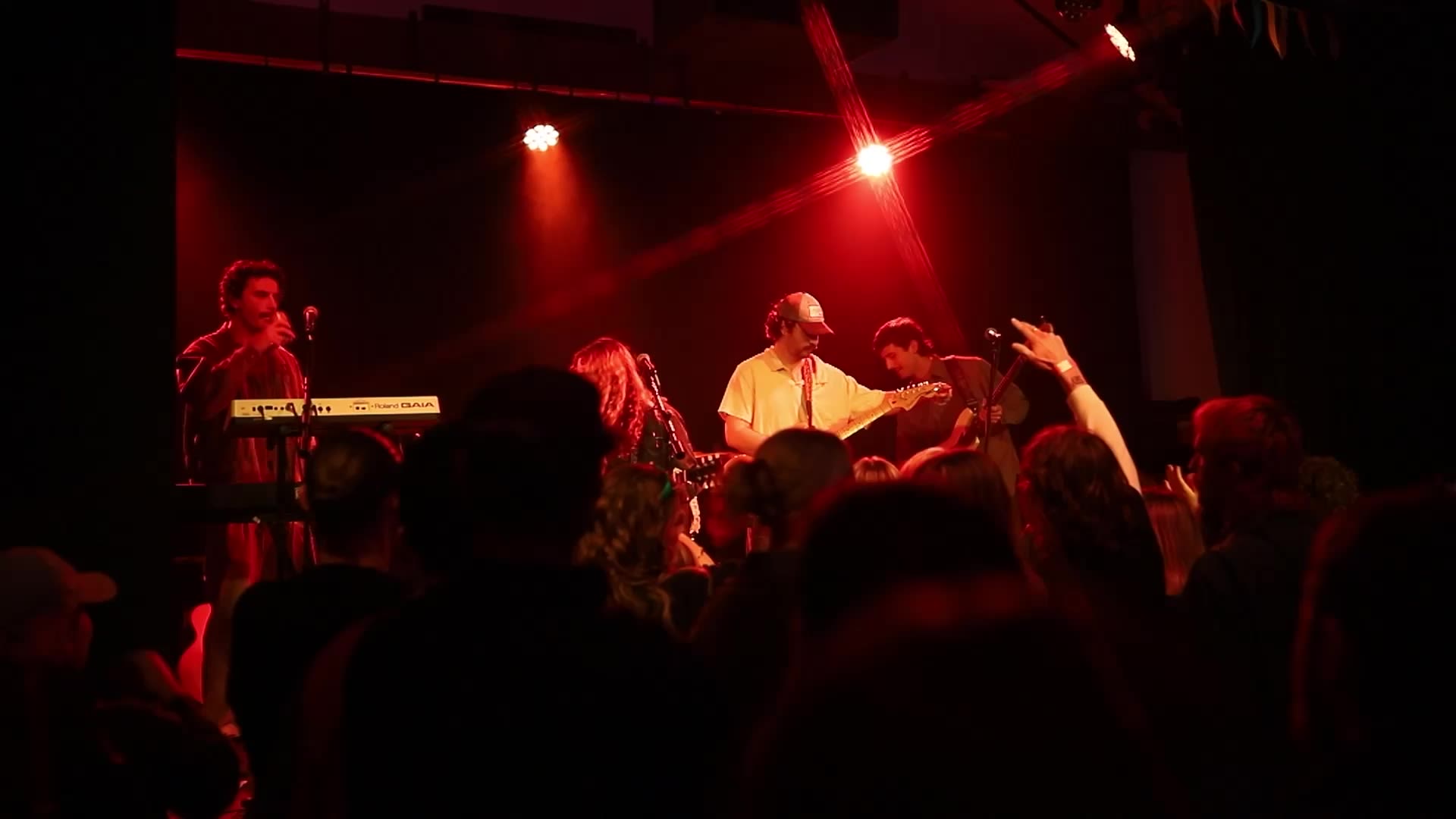
While challenges persist, artists don't plan on packing away their instruments anytime soon, clinging to the solace of performance.
"With all this AI slop and crap on the internet, I feel like people are going to start craving authenticity a bit more," Knowles says.
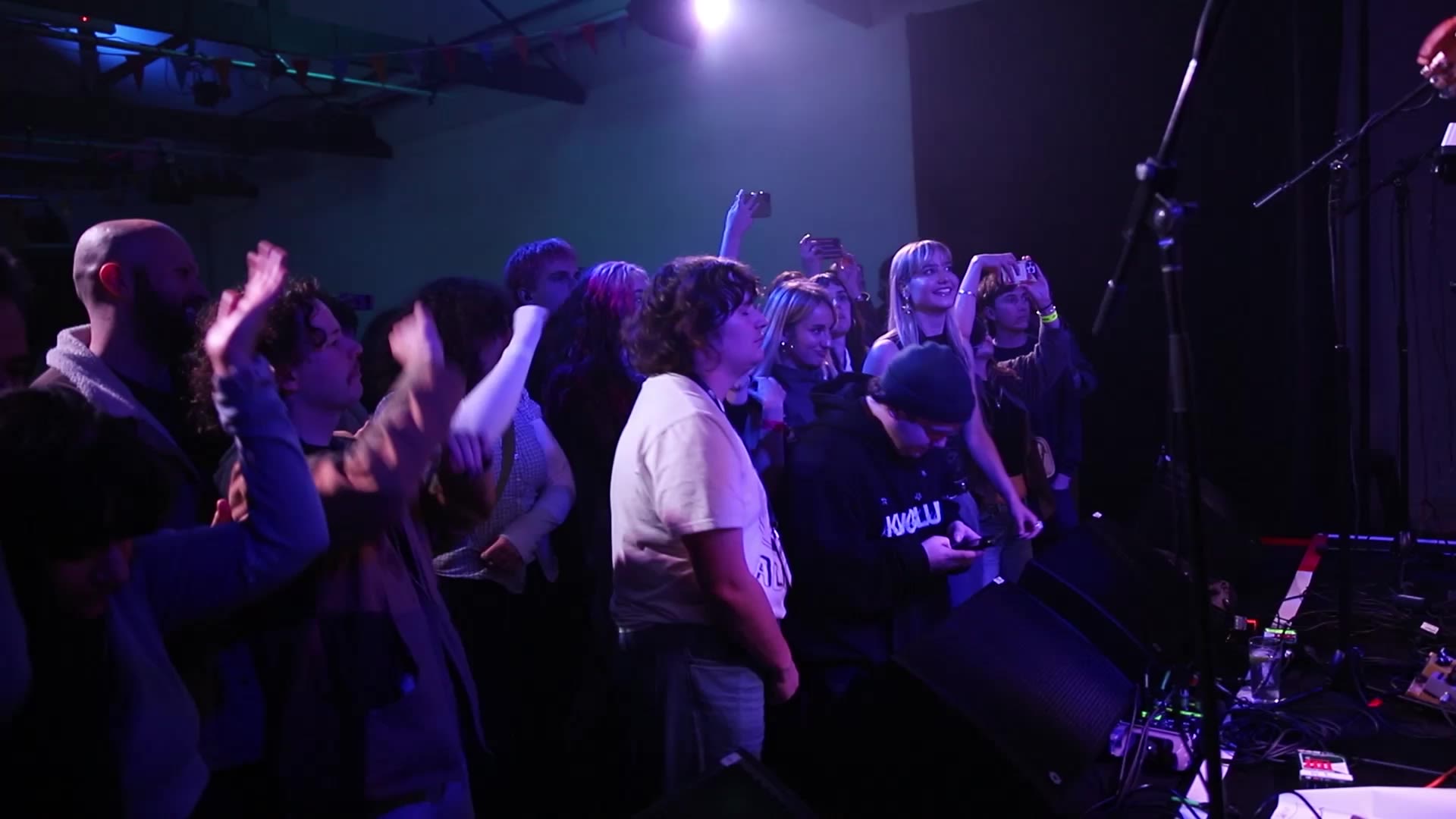
The crowd at Little Guilt's WAM gig.
The crowd at Little Guilt's WAM gig.
For Schneider, she wouldn't trade being an artist for anything.
"Being able to perform, and travel and connect with audiences is just quite surreal … to write music that other people find feeling and solace in is really special and makes it worth it," she says.
"That's my success, not feeling like I'm going to have to give it up to survive, and know that I’ll always have a community of people that want to hear the songs and join me in the journey."
Credits
Words, photos, videos, graphics & production by Kenith Png
 Built with Shorthand